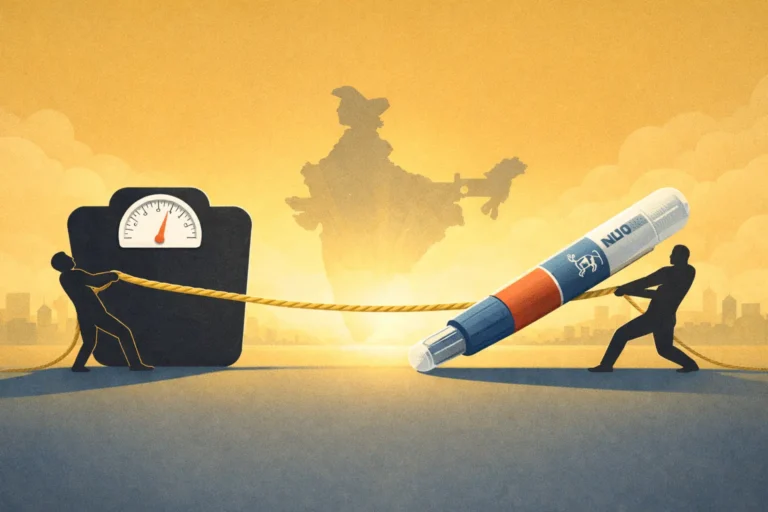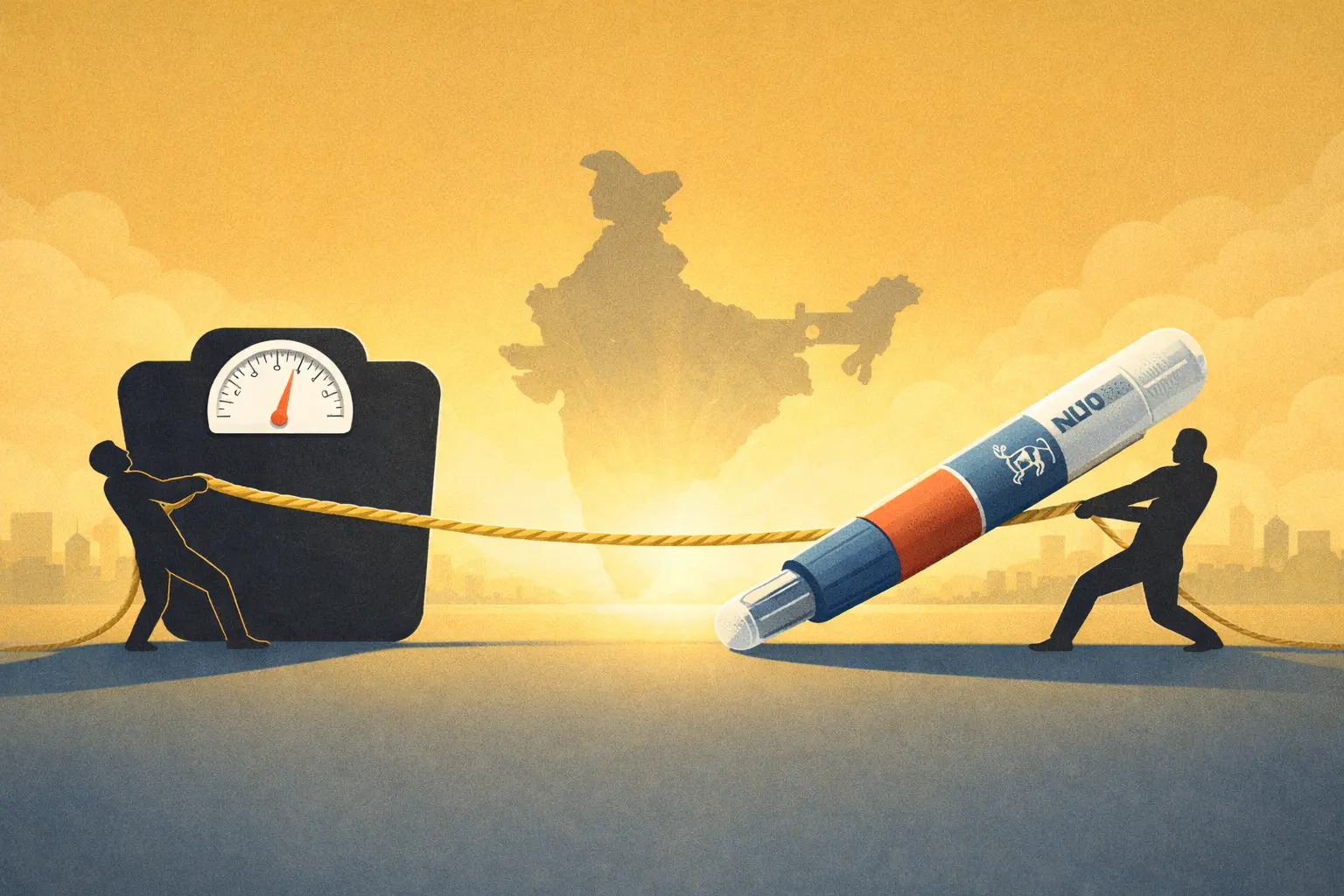
India has quietly become one of the most important battlegrounds in the global pharmaceutical industry. At the center of this contest are two drug giants racing to dominate the fast growing obesity treatment market. On one side stands Novo Nordisk, the company that pioneered blockbuster weight loss drugs. On the other is Eli Lilly, whose newer therapies are rapidly gaining traction.
While Novo Nordisk built the global momentum for modern obesity drugs, the company now faces an uncomfortable reality in India. Its rival’s drug has captured early momentum, forcing Novo to rethink its strategy in one of the world’s most promising healthcare markets.
India’s obesity and diabetes crisis is expanding rapidly, creating enormous demand for medical weight management therapies. For drugmakers, this represents a multibillion dollar opportunity. But the path to dominance is far from straightforward.
Table of Contents
- Why India Is the New Frontier for Weight Loss Drugs
- How Eli Lilly Gained an Early Advantage
- What Novo Nordisk Must Do to Regain Momentum
Why India Is the New Frontier for Weight Loss Drugs
Obesity drugs known as GLP 1 therapies have transformed the pharmaceutical landscape in recent years. These medicines work by regulating appetite and slowing digestion, helping patients feel fuller and consume fewer calories.
The global market for such treatments is projected to grow dramatically over the next decade. India, with its large population and rising obesity levels, is expected to become one of the most important growth markets.
Demand for weight loss drugs in India has surged as awareness around obesity and metabolic health increases. The domestic market has expanded several times since 2021 and continues to grow rapidly.
Two medicines have become the center of this competition. Novo Nordisk introduced its once weekly injectable therapy Wegovy, while Eli Lilly launched Mounjaro.
Both drugs belong to the same broad class of metabolic therapies, but their effectiveness and market strategies have shaped the competitive landscape.
How Eli Lilly Gained an Early Advantage
Timing played a crucial role in shaping the market. Eli Lilly introduced Mounjaro in India earlier than Novo’s Wegovy, giving the company an early opportunity to build relationships with doctors and patients.
Early sales data suggests that this head start mattered. Within months of launch, Mounjaro became the top selling therapy in the category by value in India.
Another factor is clinical perception. Studies suggest that Mounjaro may lead to greater weight reduction compared with some competing treatments when combined with lifestyle changes.
Marketing strategy also played a role. Pharmaceutical companies have invested heavily in doctor outreach, patient education programs, and partnerships with healthcare providers to build awareness around obesity treatment.
For Novo Nordisk, the challenge has been amplified by pricing dynamics. The company eventually reduced the price of Wegovy by more than a third in India to improve accessibility and boost demand.
Even with these adjustments, the competitive gap remains visible.
What Novo Nordisk Must Do to Regain Momentum
Despite the early setback, Novo Nordisk still holds powerful advantages in the global obesity therapy space. The company pioneered many of the GLP 1 treatments that reshaped the market.
To regain momentum in India, the company may need to focus on three key strategies.
First, pricing will remain critical. India is an extremely price sensitive healthcare market where most patients pay for medicines out of pocket. Lower costs could dramatically expand adoption.
Second, physician engagement and patient awareness will matter. Obesity has historically been underdiagnosed in India, and educating healthcare providers about treatment options could unlock a larger patient base.
Third, Novo may need to move quickly before generic competition intensifies. Patents for semaglutide based drugs are expected to expire in India soon, opening the door to lower cost alternatives from domestic pharmaceutical companies.
This could reshape the market dramatically, making affordability the primary driver of adoption.
The rivalry between Novo Nordisk and Eli Lilly is far from over. India’s obesity drug market is still in its early stages, and demand is expected to surge as awareness and incomes rise.
For Novo Nordisk, the challenge now is clear. The company that sparked the global weight loss revolution must prove it can still compete in the world’s most unpredictable pharmaceutical market.
About the Author