Blog

  • Intelligence Is Obvious. Grit Is Not. Sam Altman’s Hiring Lesson for the Age of AI

    Table of Contents

    1. The 10-Minute Test
    2. A Career Built on Long Bets
    3. Why Determination Outruns Brilliance
    4. The Endurance Advantage

    The 10-Minute Test

    “Intelligence is easy to tell in 10 minutes. Determination is much harder.”

    The line, often attributed to Sam Altman, has become something of a mantra in technology and venture capital circles. It distills a philosophy that has shaped how startups are funded, how founders are evaluated and how ambitious projects are judged in an era defined by rapid innovation.

    The premise is deceptively simple. In a brief meeting the kind that venture capitalists and accelerators routinely conduct sharp thinking reveals itself quickly. A founder who grasps complex questions, reasons clearly and articulates a vision with precision can signal intellectual horsepower within minutes.

    But determination the quality that compels someone to persist through technical dead ends, market skepticism and internal doubt cannot be inferred from a polished conversation. It is not a performance trait. It is a behavioral pattern visible only across time.

    The observation is rooted in Altman’s years leading Y Combinator, the startup accelerator that helped launch companies like Airbnb and Dropbox. During rapid-fire interviews with founders, evaluators had to make consequential decisions in compressed timeframes. According to Altman, what interviewers most often misjudged was not intelligence, but staying power.

    In other words: brilliance makes an impression. Endurance builds a company.

    A Career Built on Long Bets

    Altman’s own trajectory reflects the distinction. Born in Chicago in 1985 and raised in the St. Louis area, he studied computer science at Stanford University before leaving to start Loopt, a geosocial networking app. Though Loopt did not become a household name, it marked the beginning of a career defined less by quick wins and more by strategic patience.

    He later became president of Y Combinator and, in 2019, chief executive of OpenAI. Under his leadership, OpenAI has pursued some of the most ambitious long-term research goals in artificial intelligence efforts that require sustained capital, disciplined execution and tolerance for public scrutiny.

    Altman’s public commentary consistently returns to long-term thinking. He has asked himself, almost daily, whether he is working on “the most important thing” he could be doing. He has urged companies to hire “missionaries, not mercenaries.” And he has emphasized speed not as a burst of activity, but as a sustained competitive discipline.

    Why Determination Outruns Brilliance

    Philosophically, the quote privileges process over polish. Intelligence may open doors, but determination determines whether someone remains in the room when projects become difficult, when early optimism fades and when progress slows to incremental gains.

    In startup ecosystems especially, the temptation to overvalue first impressions is strong. Founders often pitch visionary ideas in compressed presentations designed to impress. Yet many ventures fail not because the idea was weak, but because execution faltered under pressure.

    Determination manifests in quieter ways: revising a product after rejection, absorbing criticism without retreat, and choosing to solve hard problems repeatedly rather than pivot toward easier acclaim. These traits rarely surface in a 10-minute exchange.

    Altman has argued that organizations should design evaluation systems that test endurance rather than charisma through trial projects, extended collaboration and observation over time. In his view, the ability to return after setbacks is more predictive than intellectual flair alone.

    The Endurance Advantage

    In an age increasingly shaped by artificial intelligence, where breakthroughs can appear overnight, Altman’s observation offers a counterintuitive lesson. The most transformative technologies and the companies that build them emerge not from flashes of insight alone but from years of disciplined work.

    Intelligence signals potential. Determination delivers outcomes.

    For founders, investors and leaders navigating volatile industries, the distinction is more than rhetorical. It is strategic. Hiring for sharp minds may build an impressive team on paper. But hiring for stamina builds institutions capable of lasting impact.

    If intelligence can be recognized in 10 minutes, determination must be proven in months sometimes years. And in projects measured not in headlines but in history, grit remains the more durable advantage.

    EDITED BY – SARTHAK MOOLCHANDANI
    { STUDENT OF MANAGEMENT STUDIES AND INTERN AT HOSTELBEE}
  • From Classroom Curiosity to Climate Innovation: Young Minds Shine at AKTU Innovation Sprint

    Table of Contents

    1. A School Student’s Idea Inspired by Environmental Concern
    2. Innovation Across Water Conservation and Forest Safety
    3. Universities Nurturing the Next Generation of Innovators

    At a time when innovation is increasingly linked to technology startups and advanced research labs, a Class 8 student from Lucknow has demonstrated that impactful ideas can emerge from early academic curiosity. During the Next Gen Kalam Innovation Sprint 2024, hosted at Dr. A.P.J. Abdul Kalam Technical University, young innovators from across Uttar Pradesh presented solutions addressing environmental and technological challenges.

    Among the top three winners was Mohammad Anas, whose eco-friendly concept designed to reduce heat emitted by outdoor air conditioning units earned second place in the competition.

    The event was organized to mark the birth anniversary of A. P. J. Abdul Kalam, widely remembered for encouraging scientific thinking and youth-driven innovation across India.

    A School Student’s Idea Inspired by Environmental Concern

    Anas, a student of Shyam Sunder Jamunadeen Inter College in the Faizullaganj area, said his idea originated from a simple yet emotional observation birds struggling to survive rising urban temperatures.

    Outdoor air-conditioning units release significant heat into surrounding environments, particularly in densely populated areas. Motivated by this issue, Anas began conceptualizing a prototype designed to reduce thermal emissions from such units.

    With guidance from his physics teacher, he explored basic scientific principles and converted his concept into a working prototype. The model has already undergone preliminary testing at multiple locations, including demonstrations at administrative facilities.

    “I wanted to invent something that could reduce the heat released from AC units after seeing the impact of extreme heat on birds,” Anas said, noting that his teacher helped him understand the scientific framework required to develop the concept.

    According to organizers, the AKTU innovation hub will assist selected participants in filing patents and refining their prototypes for future commercialization. If development progresses as expected, Anas hopes the product could reach the market within the next four years.

    Innovation Across Water Conservation and Forest Safety

    While Anas secured second place, the competition showcased a broader range of student-driven technological solutions addressing real-world problems.

    The first prize was awarded to Divy Sharma, a B.Tech student who developed a machine learning-based system to monitor household water usage and detect leaks. The system collects data from multiple water points within a home and integrates it into a mobile application, enabling users to track consumption patterns and prevent wastage.

    The prototype is currently being tested at his engineering institution in Ghaziabad and is designed to promote efficient water management at the domestic level.

    Third place went to a team from Government Engineering College, Mainpuri, which developed a layered detection system for identifying forest fires. Their model integrates sensor-based hardware with cloud-based data analysis while incorporating satellite inputs to improve early detection accuracy.

    The system combines locally developed sensors with satellite datasets, aiming to create a faster and more reliable method for identifying fire outbreaks in forest regions.

    Universities Nurturing the Next Generation of Innovators

    The Next Gen Kalam Innovation Sprint reflects a growing trend in India’s academic institutions toward encouraging innovation at an early stage. By connecting school and college students with research mentors and incubation platforms, universities are expanding the scope of entrepreneurship beyond traditional higher education frameworks.

    Organizers noted that the top three teams received prize amounts of ₹50,000, ₹30,000, and ₹20,000 respectively, along with mentorship support for further development.

    Events like these are increasingly positioned not only as competitions but as entry points into the startup ecosystem. By linking classroom curiosity with applied research and patent support, institutions such as AKTU are working to build a pipeline of young innovators prepared to address environmental and technological challenges.

    For students like Anas, the recognition represents more than an academic achievement—it marks the beginning of a journey where observation, science, and creativity intersect to shape practical solutions for the future.

    EDITED BY – TANISHKA CHAUHAN { STUDENT OF MANAGEMENT STUDIES AND INTERN AT HOSTELBEE}

  • The Quiet Phase of India’s Startup Boom: Fewer Unicorns, More Discipline

    Table of Contents

    1. Funding Returns, but the Unicorns Don’t
    2. Investors Turn Selective Amid Global Uncertainty
    3. Consolidation Signals a Maturing Startup Market

    In recent years, the startup ecosystem in India has been defined by speed rapid funding rounds, soaring valuations, and a steady stream of unicorn announcements. But in early 2025, the mood shifted. Investment activity has continued, yet the frenzy that once defined the sector appears to have cooled.

    During the first quarter of 2025, Indian technology startups attracted nearly $3 billion in funding, an increase from the previous year. On paper, the numbers suggest stability, even growth. Yet beneath the surface lies a striking development: not a single new unicorn emerged during the period.

    For an ecosystem that once celebrated billion dollar valuations almost monthly, the absence raises an important question has the startup boom slowed, or is it simply evolving?

    Funding Returns, but the Unicorns Don’t

    The investment flow indicates that capital has not disappeared. Instead, it appears to be moving differently. Rather than backing high-risk early-stage ventures chasing rapid valuation jumps, investors are increasingly favoring acquisitions and strategic partnerships.

    In the first quarter alone, 38 acquisition deals were recorded about 41% higher than the same period last year. These deals involved established corporations acquiring emerging brands with proven traction.

    One prominent example came when Hindustan Unilever acquired the digital first skincare brand Minimalist for approximately $350 million. The move gave the global consumer goods giant access to a fast-growing online brand while providing Minimalist with stronger distribution capabilities.

    Similarly, the DS Group partnered with Patanjali Ayurved to acquire Magma General Insurance in a deal exceeding half a billion dollars.

    Such acquisitions reflect a broader structural change: instead of building entirely new ventures from scratch, large companies are integrating agile startups into their business ecosystems.

    Investors Turn Selective Amid Global Uncertainty

    Market analysts suggest that investor caution is tied to global economic uncertainty and the aftereffects of the hyper-growth funding cycle between 2020 and 2022.

    According to Gaurav Dua, Head of Capital Market Strategy at Mirae Asset Sharekhan, the current phase represents a necessary recalibration.

    Rather than aggressively funding every emerging idea, investors are now evaluating whether previously funded startups are delivering sustainable business results. This shift marks a transition from valuation-driven growth to profitability focused expansion.

    Dua argues that the slowdown in early-stage investments down more than 50% compared to last year is not a sign of decline but of discipline. Investors are increasingly skeptical of repetitive pitches built around trending buzzwords such as artificial intelligence or “digital-first” branding without clear revenue models.

    Global macroeconomic volatility and geopolitical uncertainty have also contributed to a more cautious approach. With markets fluctuating and liquidity tightening worldwide, investors are prioritizing stability over speculation.

    Consolidation Signals a Maturing Startup Market

    The growing number of acquisitions suggests that India’s startup ecosystem may be entering a consolidation phase rather than experiencing a slowdown.

    Strategic buyouts allow startups with strong products but limited infrastructure to scale faster under established corporate networks. At the same time, corporations benefit from innovation without the long timelines required for internal development.

    This shift reflects a deeper transformation in the startup landscape one that values resilience over rapid valuation spikes. The absence of unicorn announcements, once seen as a warning sign, may instead indicate a healthier ecosystem focused on long-term sustainability.

    Analysts note that innovation has not disappeared; it has simply become more measured. Investors are now rewarding startups that demonstrate operational clarity, revenue visibility, and scalable business models.

    For India’s startup ecosystem, the current quiet phase may not represent a slowdown at all. Instead, it could mark a transition from exuberance to maturity an evolution that replaces hype with durability and signals the foundation for the next wave of sustainable growth.

    EDITED BY – TANISHKA CHAUHAN ( STUDENT OF MANAGEMENT STUDIES AND INTERN AT HOSTELBEE)

    FOLLOW HER

    www.linkedin.com/in/tanishka-chauhan-715a27323

  • From 400 to 200,000: India’s Startup Surge Takes Center Stage on National Startup Day

    Table of Contents

    1. A Decade of Startup India Growth
    2. Government Push for Deep Tech and Corporate Collaboration
    3. Expanding Opportunities Beyond Metro Cities

    As India prepares to mark another National Startup Day, Narendra Modi is set to address entrepreneurs, investors, and policymakers at the flagship event in New Delhi, highlighting a decade-long transformation that has reshaped the country’s innovation landscape.

    Officials from the Department for Promotion of Industry and Internal Trade (DPIIT) say the scale of change has been dramatic. When the Startup India initiative was launched in 2016, India had roughly 400 recognized startups. Today, that number has crossed 200,000, reflecting rapid growth driven by policy support, digital adoption, and rising entrepreneurial ambition.

    The Prime Minister will inaugurate the National Startup Day event on January 16, reinforcing the government’s continued focus on innovation-led economic development and job creation.

    A Decade of Startup India Growth

    The foundation for India’s startup expansion was laid in August 2015, when Modi used his Independence Day address to call for a shift from a nation of job seekers to one of job creators. The formal launch of Startup India in January 2016 introduced regulatory simplifications, funding support, tax incentives, and incubation frameworks designed to encourage new ventures.

    According to DPIIT officials, the results are visible not only in startup numbers but also in employment generation. Government estimates indicate that recognized startups have created more than 2.1 million jobs over the past decade, with each startup generating an average of 11 positions.

    The growth has also expanded geographically. Over 52 percent of recognized startups are now based in tier-2 and tier-3 cities, signaling a decentralization of innovation beyond traditional hubs such as Bengaluru, Mumbai, and Delhi.

    Officials say nearly 80 startups are being recognized daily, reflecting sustained entrepreneurial momentum across sectors ranging from fintech and health technology to artificial intelligence and advanced manufacturing.

    Government Push for Deep Tech and Corporate Collaboration

    As India enters the next phase of its startup journey, policymakers are shifting their focus toward deep technology sectors, particularly artificial intelligence, semiconductor innovation, and advanced digital infrastructure.

    Amardeep Singh Bhatia, secretary at DPIIT, said the government is encouraging large private corporations to actively mentor and collaborate with emerging startups. The strategy aims to create mutually beneficial partnerships in which startups develop customized technological solutions while corporations provide market access and operational scale.

    Under this framework, companies will be encouraged to outsource specific technical challenges to startups, allowing early-stage ventures to integrate directly into industrial supply chains. Officials believe such collaboration could reduce manufacturing costs while accelerating innovation cycles.

    Several memoranda of understanding (MoUs) have already been signed between corporations and startups to promote this ecosystem-driven approach.

    Sanjiv, a joint secretary at DPIIT, described the government’s role as that of an enabler rather than a direct operator. Simplified regulations, easier funding access, mentorship platforms, and international exposure programs have helped strengthen the startup environment over the past decade.

    The 2026 National Startup Day holds symbolic significance as it marks ten years of the Startup India initiative while also coinciding with the fifth edition of the State Startup Ranking Framework and the National Startup Awards.

    As policymakers look ahead, the emphasis remains on sustaining innovation while expanding inclusion ensuring that the next generation of entrepreneurs emerges not only from metropolitan centers but from every region of the country.

    EDITED BY – TANISHKA CHAUHAN [ STUDENT OF MANAGEMENT STUDIES & INTERN AT HOSTELBEE}

    FOLLOW HER :

    www.linkedin.com/in/tanishka-chauhan-715a27323

  • One Hour, One Reply: How a Message to Nithin Kamath Helped Shape a Founder’s Journey

    Table of Contents

    1. A Cold Email and an Unexpected Response
    2. Learning From Rejection and Building Forward
    3. Accessibility in India’s Startup Culture

    In 2020, as India’s startup ecosystem was navigating uncertainty during the pandemic era, a young entrepreneur decided to take a chance. With a newly launched venture and little industry visibility, Manoj Ahirwar sent a cold email to Nithin Kamath, the co-founder and chief executive of Zerodha, hoping for guidance or perhaps investment.

    He did not expect a reply.

    Instead, he received one within an hour.

    Years later, Ahirwar shared the story on X, reflecting on how that brief exchange became a defining motivational moment in his entrepreneurial journey. While the interaction did not lead to funding, he says it helped reinforce his belief that persistence and access can shape the trajectory of early-stage founders.

    A Cold Email and an Unexpected Response

    At the time, Ahirwar had just launched MoneyFit, a financial-focused startup idea still in its early conceptual phase. Like many first-time founders, he sought validation from experienced industry leaders. His email to Kamath, sent on August 30, 2020, introduced his product and requested feedback.

    According to Ahirwar, the message was sent at 9:03 p.m. By 10:12 p.m., Kamath had replied, tagging members of his team to review the proposal.

    The reply did not guarantee investment, nor did it promise immediate collaboration. Yet for a young founder with limited resources, the speed and openness of the response carried significance.

    “It was incredible to see how accessible he was,” Ahirwar later wrote, noting that the interaction challenged his assumptions about how difficult it might be to reach industry leaders.

    The exchange also reflects a broader shift in India’s startup culture, where founders increasingly share their experiences publicly and maintain direct digital engagement with aspiring entrepreneurs.

    Learning From Rejection and Building Forward

    The proposal ultimately did not progress into funding discussions. Looking back, Ahirwar acknowledged that his startup was not yet ready for investment. The product required refinement, market clarity, and operational scaling common challenges for early-stage ventures.

    But rather than discouraging him, the experience strengthened his commitment to continue building.

    Five years later, now based in Singapore, Ahirwar reports that his current company has crossed $200,000 in revenue. While modest by venture backed standards, the milestone represents steady growth driven by iteration and long-term persistence.

    Entrepreneurship experts often emphasize that early rejection can play a constructive role in startup development. By pushing founders to refine business models and validate markets, such moments frequently become part of the learning curve rather than the endpoint.

    Ahirwar echoed this perspective in his post, writing that he remains glad he sent the email despite the outcome.

    Accessibility in India’s Startup Culture

    Kamath, widely recognized for building Zerodha into one of India’s largest retail brokerage platforms without traditional venture capital funding, has often advocated for sustainable startup growth over rapid scaling. His relatively open engagement style on digital platforms has contributed to his visibility among emerging founders.

    The story highlights how digital communication has reshaped mentorship dynamics within the startup ecosystem. Where formal networks once dominated access to investors, platforms like X now enable direct interaction sometimes within minutes.

    For Ahirwar, that single reply did not change his startup overnight. But it did something arguably more important: it validated the act of trying.

    In the unpredictable world of entrepreneurship, even a short email response can become the momentum that keeps a founder moving forward.

    EDITED BY – TANISHKA CHAUHAN { STUDENT OF MANAGEMENT STUDIES & INTERN AT HOSTELBEE}

  • From Campus Ideas to Market Reality: MNNIT Allahabad’s Startup Push Gains Momentum

    Table of Contents

    1. A Growing Culture of Innovation
    2. Funding Support and Institutional Backing
    3. Startups Across Diverse Sectors
    4. Building an Entrepreneurial Ecosystem

    In the northern Indian city of Prayagraj, a quiet transformation is unfolding inside the classrooms and laboratories of Motilal Nehru National Institute of Technology Allahabad. Over the past year, the institute has incubated 29 startups spanning sectors from healthcare to digital gaming, supported by nearly ₹40 lakh in funding an effort that reflects the growing national emphasis on innovation-led economic growth.

    The initiative is being driven by the institute’s Innovation and Incubation Hub MNNIT Foundation (IIHMF), which has received institutional and policy support aligned with startup development programs of the Government of India. Officials say the program aims to convert academic research and student-led experimentation into commercially viable ventures while strengthening regional entrepreneurship.

    A Growing Culture of Innovation

    What was once largely an academic environment focused on engineering education is gradually evolving into a startup-driven ecosystem. According to IIHMF officials, 12 BTech and PhD students are currently engaged in active entrepreneurial projects, working alongside mentors and industry advisors.

    Sanjay Kumar Singh, the chief executive officer of the incubation hub, described the initiative as an attempt to bridge the gap between classroom learning and real-world application. Students are not only developing technological solutions but are also contributing to early-stage job creation through prototype development, product testing, and operational planning.

    The institute’s approach mirrors a broader national trend in which technical institutions are becoming innovation centers. By encouraging students to move beyond conventional career paths, the program seeks to foster a mindset of self-reliance and enterprise.

    Singh emphasized that future expansion plans include increasing the number of supported ventures and strengthening collaborations with investors and industry partners. The goal, he said, is to ensure that emerging technologists view entrepreneurship as a practical and accessible career option.

    Funding Support and Institutional Backing

    Financial assistance for these startups comes through joint support mechanisms involving the Department of Science and Technology and sectoral partnerships with state-level agencies, including healthcare initiatives. The incubation hub is also recognized under the NIDHI i-TBI framework, a national program designed to promote technology-based entrepreneurship in academic institutions.

    Additionally, IIHMF operates in collaboration with Uttar Pradesh Electronics Corporation Ltd under the StartinUP scheme, which aims to strengthen the startup infrastructure across the state.

    Beyond funding, the incubator provides structured mentorship, networking opportunities, legal guidance, and market-access support resources that are often difficult for first-time founders to secure independently.

    Startups Across Diverse Sectors

    The diversity of startups emerging from the campus reflects shifting technological priorities.

    Among the ventures gaining early recognition are Henics Rehab Private Limited, focused on healthcare services; Inaequalis Consulting Private Limited, working in business consulting; Saboroso Food Private Limited in the food products sector; and Gaming Ecosystem Private Limited, operating in the rapidly expanding digital gaming space.

    Such sectoral diversity illustrates how campus innovation is no longer confined to traditional engineering outputs but is expanding into consumer markets and digital services.

    Building an Entrepreneurial Ecosystem

    Institutional incubators like IIHMF are increasingly serving as catalysts for India’s startup expansion beyond metropolitan hubs. By connecting academia with industry and policy frameworks, the program at MNNIT Allahabad demonstrates how regional technical institutions can become engines of innovation.

    While the funding scale remains modest, the long-term impact may lie in cultivating entrepreneurial confidence among students. As more academic institutions adopt similar incubation models, initiatives like this could help reshape how technical education contributes to economic development one student startup at a time.

    EDITED BY – TANISHKA CHAUHAN ( STUDENT OF MANGEMENT STUDIES & INTERN AT HOSTELBEE)

    FOLLOW HER –

    www.linkedin.com/in/tanishka-chauhan-715a27323

  • Startup Prints Pitch on Giant Cake, Sends It to VC Firm to Land $5 Million Investment

    Startup Prints Pitch on Giant Cake, Sends It to VC Firm to Land $5 Million Investment

    Table of Contents

    1. The Funding Hustle Gets Creative
    2. The Cake That Doubled as a Pitch Deck
    3. What the “Seed Memo” Included
    4. Internet Reacts: Genius or Gimmick?
    5. The Bigger Picture: Standing Out in Venture Capital

    1. The Funding Hustle Gets Creative

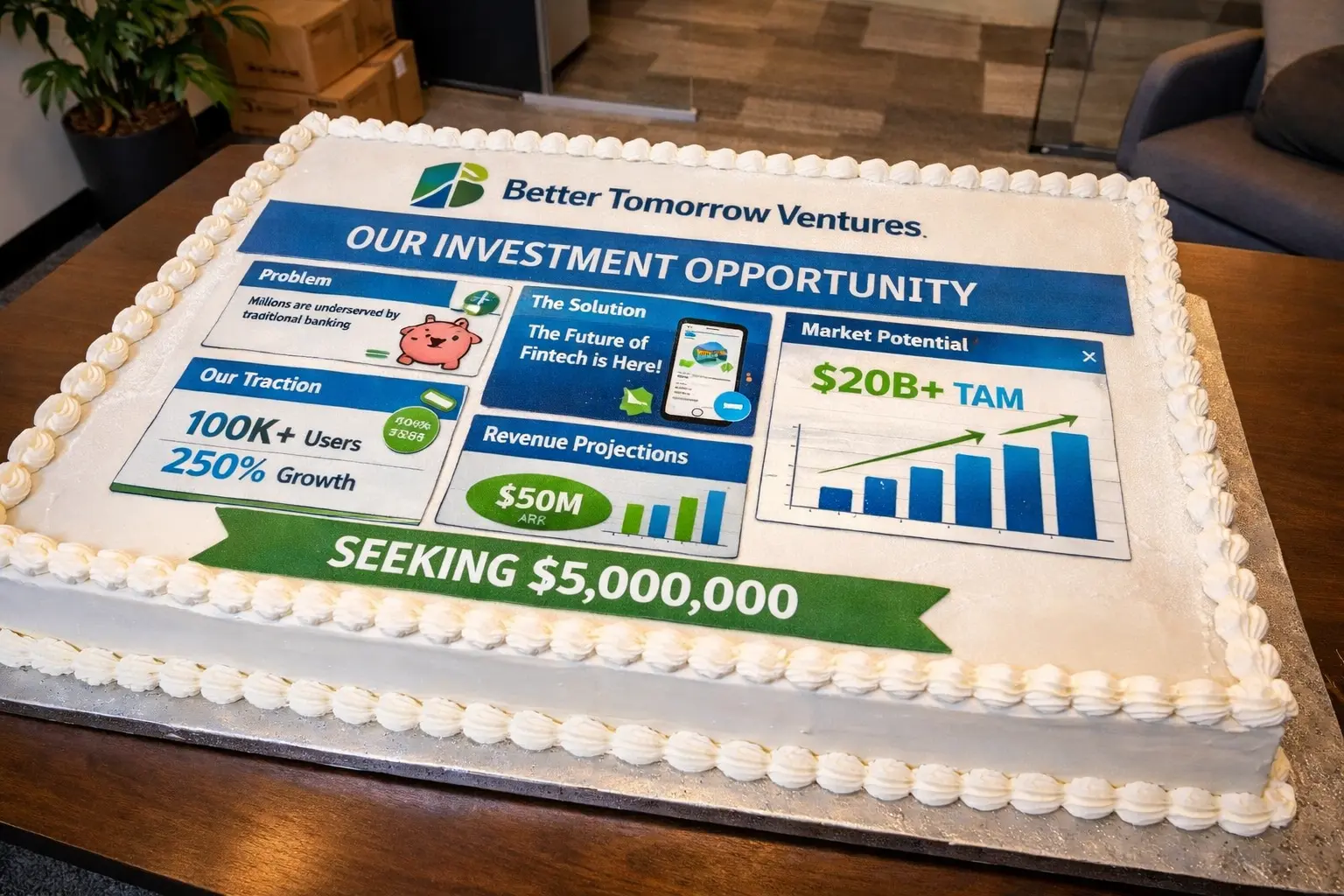
    In the competitive world of startup fundraising, getting a meeting with a venture capital firm often requires bold and unconventional strategies. One startup recently took “thinking outside the box” quite literally by delivering a massive, custom-printed cake featuring its pitch deck to the offices of Better Tomorrow Ventures.

    The fintech-focused early-stage venture firm’s co-founder, Sheel Mohnot, shared a photo of the cake on X, instantly turning the edible pitch into a viral moment.

    2. The Cake That Doubled as a Pitch Deck

    “Someone just came and delivered an absolutely massive cake to our office as a pitch for their company,” Mohnot wrote in his post. “Definitely one way to get attention! Who wants some cake?”

    The image shows a large rectangular sheet cake placed inside a cardboard delivery box. The cake is bordered with light blue frosting dollops and printed across the top with a detailed “Seed Memo.”

    Mohnot later admitted he couldn’t resist taking a slice before snapping the photo.

    “In a world of cold emails and crowded inboxes, one startup chose frosting over formatting.”

    3. What the “Seed Memo” Included

    The edible memo was structured like a traditional investor pitch document and reportedly aimed to raise $5 million in funding.

    Sections on the cake included:

    • What We’re Building
    • Market Opportunity
    • Product Overview
    • Business Model
    • Traction
    • The $5 Million Ask

    It was, in essence, a fully formatted seed memo just printed in icing instead of ink.

    4. Internet Reacts: Genius or Gimmick?

    The stunt sparked mixed reactions online.

    Some praised the founders for their creativity and hustle, calling it a brilliant way to stand out in a sea of pitch decks. Others questioned whether such theatrics risk appearing unprofessional in a high-stakes funding environment.

    In venture capital, where first impressions matter, bold moves can either create memorable differentiation or raise eyebrows.

    “The cake may be sweet — but will the investment be sweeter?”

    5. The Bigger Picture: Standing Out in Venture Capital

    The startup ecosystem is saturated. Investors receive hundreds — sometimes thousands — of cold pitches each year. With inboxes overflowing and meeting slots limited, founders are constantly searching for new ways to break through the noise.

    While it remains unclear whether the cake secured the $5 million investment, it undeniably achieved one objective: attention.

    And in early-stage fundraising, attention is often the first hurdle.

    Whether this edible pitch becomes a case study in creative fundraising or simply a viral anecdote, one thing is certain this startup ensured its pitch wouldn’t be forgotten.

  • The Future of Medicine May Live in Your Gut

    Table of Contents

    1. A Lab in a Box: Turning Stool Samples Into Health Signals
    2. From Prevention to Prescription: The Business of the Microbiome

    A Lab in a Box: Turning Stool Samples Into Health Signals

    For decades, medicine has largely been reactive diagnosing disease after symptoms appear and prescribing treatment once damage is done. In a modest laboratory in Bengaluru, a team of scientists is betting that the future of healthcare lies in reversing that equation.

    Founded in 2014 by Debojyoti Dhar and Kumar Sankaran, Leucine Rich Bio is building its business on a premise that once belonged mostly to academic journals: that the trillions of microorganisms living inside the human gut may hold early warnings and solutions for chronic disease.

    Their flagship test, BugSpeaks, arrives in a discreet at-home kit. Customers provide a stool sample, ship it to the company’s Bengaluru lab, and weeks later receive a report assigning them a “Rich Index Score” — a composite marker of microbial diversity and balance. Lower diversity, researchers increasingly believe, is associated with metabolic disorders, inflammation and weakened immunity.

    Behind the scenes, the process resembles genomic research more than a routine diagnostic. Scientists extract microbial DNA and run it through next-generation sequencing machines, decoding strings of A, T, G and C the four nucleotides that form genetic instructions. The patterns reveal which bacteria, fungi and viruses inhabit the gut, and in what proportions.

    But raw data is not the product. The company translates sequencing results into a three-month personalised diet plan designed to increase beneficial microbes and suppress harmful ones. Unlike genes, Dhar notes, the microbiome is modifiable. “Food,” he often says, “is the most powerful intervention.”

    The test, priced at ₹10,000, targets consumers over 40 managing lifestyle conditions, as well as younger urban Indians drawn to longevity and preventive wellness. The report maps vitamin synthesis potential, short-chain fatty acid production and even antibiotic resistance patterns metrics that once remained confined to research institutions.

    Leucine Rich Bio has since expanded into skin microbiome testing and plans to introduce oral and vaginal microbiome analyses. Under its supplement brand, RychBiome, it offers personalised probiotics and topical products informed by individual microbial data.

    The promise is alluring: what if the bacteria in your gut could tell you not only what to eat but how to avoid diabetes, fatty liver disease or hypertension?

    From Prevention to Prescription: The Business of the Microbiome

    The company’s ambitions extend well beyond diet charts. In a registered clinical trial involving patients with Type 2 diabetes, participants who followed BugSpeaks’ dietary recommendations alongside medication saw a reported 20 percent reduction in HbA1c levels over three months a marker of long-term blood glucose control. Inflammation and blood pressure indicators also declined. The findings were published in 2024.

    Further trials are underway, including a collaboration with AIIMS Raipur exploring whether microbiome-based nutrition can improve quality of life in cancer patients undergoing chemotherapy.

    For now, the tests are positioned as wellness tools rather than diagnostic devices. But the long-term vision is unmistakably clinical even pharmaceutical. The founders speak openly about drug discovery as the next frontier, citing growing scientific consensus that microbial imbalance, or dysbiosis, plays a role in numerous chronic conditions.

    The business model reflects that scale of ambition. Revenue flows not only from direct-to-consumer sales but also from partnerships with hospitals, diagnostic chains and FMCG companies seeking microbiome insights to refine product development. International collaborations now extend to the Philippines, Brazil and the Middle East, where the company has established a Dubai-based entity to serve the GCC region.

    The global microbiome analysis market, valued at over $1 billion in 2024, is projected to nearly double by 2030. Competitors such as Viome Life Sciences and Microba have already positioned themselves in Western markets. Leucine Rich Bio’s differentiator, its founders argue, is its growing proprietary database of Indian microbiome profiles more than 20,000 samples analysed to date.

    Unlike many venture-backed biotech startups, the company has remained largely bootstrapped, raising early angel funding but delaying institutional capital while validating its science.

    Whether microbiome science ultimately reshapes mainstream medicine remains an open question. But as preventive healthcare gains traction in India’s expanding middle class, the notion that the path to better health begins not in a hospital ward but in the gut no longer sounds fringe.

    If Leucine Rich Bio’s founders are right, tomorrow’s prescriptions may begin with a simple question: what, exactly, is living inside you?

    About the Author,

    Swasti Jain,
    Management student and Intern at hostelbee.com
    Follow her:

  • The €1 Billion Bet on Gen Z: eBay Buys Depop to Rewire the Future of Resale

    The €1 Billion Bet on Gen Z: eBay Buys Depop to Rewire the Future of Resale

    Table of Contents

    1. A Strategic Return to Youth Commerce
    2. Why Second-Hand Is the New First Choice
    3. The Financial Backdrop: Etsy’s Exit
    4. What This Means for the Resale Economy

    In a decisive move to secure the loyalty of the next generation of consumers, eBay has agreed to acquire second-hand fashion marketplace Depop from Etsy in a $1.2 billion (€1.0 billion) all-cash transaction.

    The deal signals more than just another corporate reshuffle in Silicon Valley. It is a recalibration of eBay’s identity — a return to its roots in peer-to-peer commerce, now reframed for Gen Z’s resale-driven, sustainability-conscious economy.

    As of December 31, 2025, Depop counted 7 million active buyers — nearly 90% under the age of 34 — and more than 3 million active sellers. For eBay, whose growth ambitions increasingly hinge on cultural relevance as much as scale, those numbers represent not just users but future lifetime value.

    Chief Executive Jamie Iannone described the acquisition as a long-term growth lever, positioning Depop to benefit from eBay’s operational infrastructure and global reach. The subtext is clearer: youth commerce is no longer optional — it is existential.

    A Strategic Return to Youth Commerce

    Depop, founded in 2011, built its identity around social discovery and curated resale — closer to Instagram than a traditional marketplace. Its aesthetic, community ethos, and influencer-driven listings attracted young buyers seeking uniqueness over uniformity.

    For eBay, the acquisition reflects both opportunity and necessity.

    The broader resale market has expanded rapidly, driven by rising consumer prices, environmental concerns, and a cultural shift toward vintage and circular fashion. Younger consumers, in particular, are redefining ownership — prioritizing resale, recommerce, and thrifted individuality over fast-fashion churn.

    Five years ago, Etsy acquired Depop for $1.6 billion, betting on similar tailwinds. But the strategic fit proved complex. Etsy’s marketplace centers on handmade and artisan goods; Depop thrived on streetwear drops, Y2K aesthetics, and algorithmic discovery.

    Now, with eBay stepping in, the alignment appears clearer: scale meets subculture.

    The transaction is expected to close in the second quarter and will allow Depop to retain its brand, platform, and cultural independence — a detail that signals eBay’s awareness that authenticity, not integration, is Depop’s core asset.

    Why Second-Hand Is the New First Choice

    The second-hand clothing market is no longer niche. It is structural.

    Consumers increasingly view resale as economically rational and environmentally responsible. With inflation reshaping purchasing behavior across Europe and the United States, used apparel offers price flexibility without sacrificing brand appeal. At the same time, sustainability concerns have pushed circular fashion into the mainstream.

    For Gen Z, resale is not a compromise — it is a lifestyle.

    Depop’s growth underscores that shift. Nearly 90% of its buyers are under 34, making it one of the youngest large-scale marketplaces globally. In an era where digital platforms compete not just for transactions but for cultural relevance, that demographic concentration carries strategic weight.

    Market reaction reflected investor optimism. eBay shares climbed more than 7% in after-hours trading following the announcement, while Etsy shares surged nearly 15%, suggesting shareholders view the sale as capital discipline rather than retreat.

    Etsy said it would use the proceeds for general corporate purposes, share repurchases, and reinvestment in its core marketplace — a move that narrows its strategic focus.

    What This Means for the Resale Economy

    The acquisition consolidates the resale ecosystem at a moment of intensifying competition. Platforms are racing to eliminate seller fees, streamline logistics, and offer buyer protections — all while preserving the peer-to-peer authenticity that attracts younger users.

    For eBay, the deal is both defensive and forward-looking. It protects market share in second-hand commerce while injecting cultural credibility into a brand often associated with earlier internet eras.

    The larger question is whether scale can coexist with subculture. Depop’s value lies in its community-driven energy; eBay’s strength lies in operational muscle.

    If executed carefully, the €1 billion bet may do more than expand a portfolio. It could redefine how legacy marketplaces reinvent themselves in the age of Gen Z wallets — where resale is not a trend, but the architecture of future commerce.

  • InstaHelp Urban Company Hits 50,000 Daily Bookings — But Profitability Remains Uncertain

    InstaHelp Urban Company Hits 50,000 Daily Bookings — But Profitability Remains Uncertain

    InstaHelp Urban Company has crossed 50,000 daily bookings across five Indian metros, marking the fastest scale-up in the company’s history. Less than a year after its Mumbai pilot, the quick housekeeping vertical is now live across dense micro-markets in Mumbai, Bengaluru, Delhi NCR, Hyderabad and Pune.

    The milestone is symbolic. Urban Company’s core India consumer services business took nearly six years to reach similar daily volumes. InstaHelp has achieved that number in under twelve months.

    Yet the bigger story is not scale. It is sustainability.

    InstaHelp Urban Company: Scale Is Rising Faster Than Profits

    In Q3 FY26, InstaHelp Urban Company recorded 1.61 million orders and ₹28 crore in net transaction value. But it also reported an adjusted EBITDA loss of ₹61 crore.

    Loss per order narrowed significantly — from ₹760 in Q2 to ₹381 in Q3 — suggesting improving unit economics. Still, profitability remains distant.

    Urban Company’s leadership has been unusually transparent. The company has acknowledged that it does not yet know what steady-state margins for InstaHelp Urban Company will look like — or how long it will take to reach break-even.

    That candor reflects the experimental nature of the model.

    Why InstaHelp Urban Company Depends on Micro-Market Density

    Unlike Urban Company’s traditional categories such as beauty or appliance repair, InstaHelp Urban Company operates in tighter catchment zones. Execution depends heavily on:

    • High demand density
    • Strong partner utilisation
    • Reliable supply within 10–15 minute response windows
    • Increasing average order value (AOV)

    In many ways, the model resembles a blend of quick-commerce logistics and marketplace aggregation. The operational complexity multiplies rather than adds up.

    The company describes the business as “micro-market heavy and micro-market dense,” meaning profitability depends on local clustering of both demand and service partners.

    Pricing Remains the Core Challenge for InstaHelp Urban Company

    At present, InstaHelp Urban Company services are priced aggressively — often at ₹149, and occasionally as low as ₹49.

    These price points drive adoption. But they also suppress margins.

    Internally, executives estimate that average order value likely needs to reach ₹300–₹700 for the business to approach break-even. On earnings calls, leadership has suggested AOV must increase to roughly 1.8–2 times current levels.

    Until that pricing power materializes, growth may continue — but profits may not.

    Demand Patterns Are Still Inconsistent

    Usage data suggests InstaHelp Urban Company is not yet a habitual service for most customers.

    Approximately 30–40% of demand comes from segments such as bachelors and working women who batch chores and schedule services in advance. The remaining 60% appears reactive — bookings triggered by a househelp’s absence, guest visits or episodic cleaning needs.

    This differs from food delivery or grocery quick-commerce platforms, where weekly or daily repeat behaviour anchors predictable volumes.

    For InstaHelp Urban Company, repeat usage is improving in older micro-markets — but consistency remains a work in progress.

    Growth Momentum vs. Business Model Clarity

    The central tension is this: InstaHelp Urban Company has demonstrated clear demand. It has scaled rapidly. It has reduced per-order losses within a single quarter.

    But it still cannot define with precision:

    • What mature margins will look like
    • How much total capital will be required
    • When the business will stop burning cash
    • What a “good” outcome truly means

    After nearly a year of operations and tens of crores in quarterly losses, those questions remain open.

    Urban Company may not have the luxury of waiting. Competition in hyperlocal services is intensifying, and consumer expectations around speed and convenience are shifting rapidly across Indian metros.

    The Bigger Question for InstaHelp Urban Company

    Fifty thousand daily bookings prove that demand exists. The harder challenge for InstaHelp Urban Company is converting that demand into predictable, durable profitability.

    Scale has arrived.

    The economics are still being written.

    Link: Urban Company