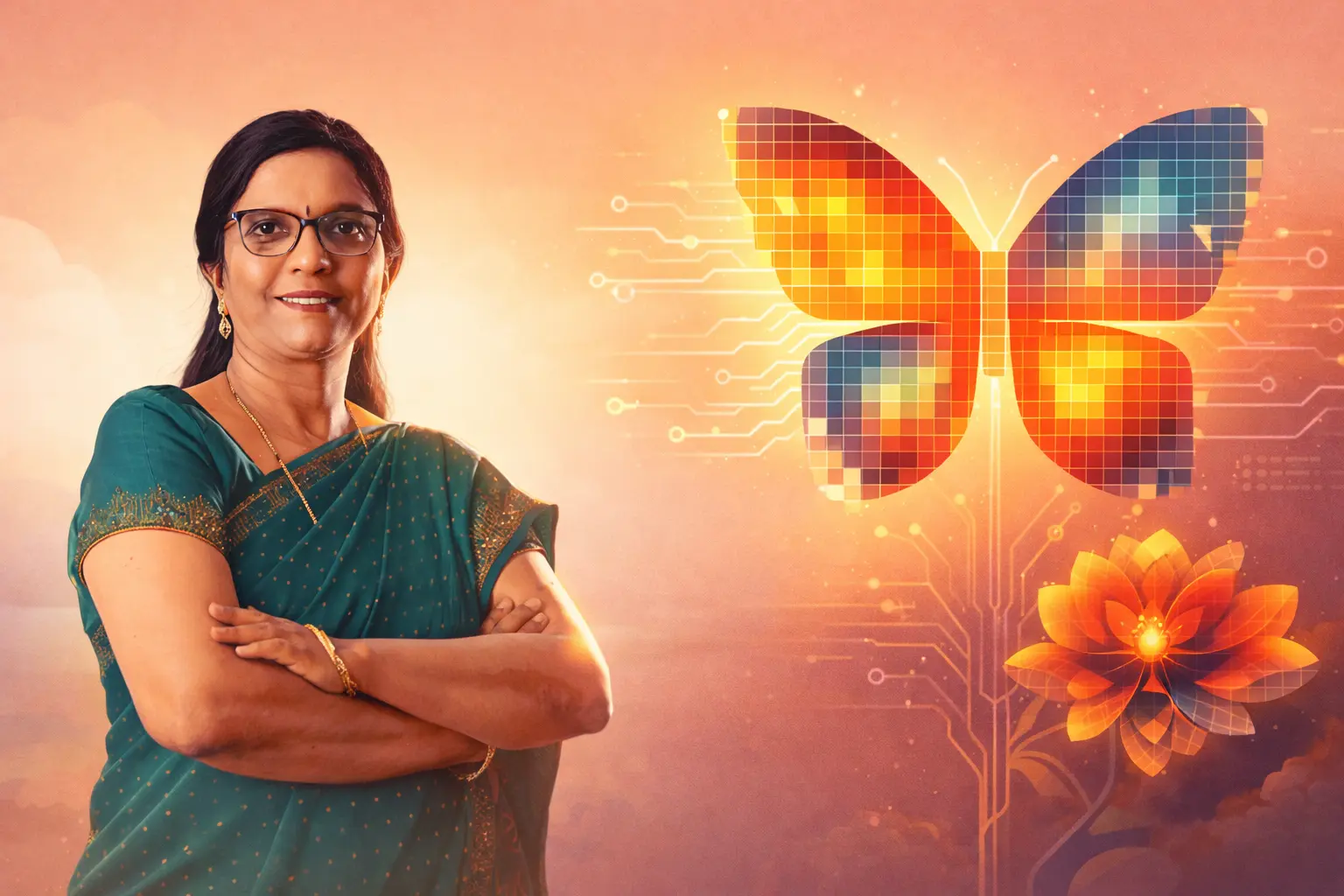
Artificial intelligence is reshaping industries across the world. Yet some of its most powerful applications are unfolding quietly in hospitals, clinics, and diagnostic labs. One of the pioneers behind this transformation is Geetha Manjunath, an Indian technologist whose work is redefining how breast cancer can be detected.
As the founder and chief executive of Niramai Health Analytix, Manjunath has developed an artificial intelligence driven diagnostic platform that detects breast cancer using thermal imaging and machine learning. The technology offers a non invasive, radiation free method for screening and could dramatically expand access to early cancer detection.
In a country where millions of women still lack access to regular screening, her work is addressing a critical healthcare challenge. Early detection often determines survival rates in breast cancer cases. By combining deep learning with medical imaging, Manjunath has sought to make screening safer, more accessible, and scalable.
Her journey reflects a broader shift in India’s innovation landscape where scientists and technologists are increasingly building global solutions from local problems.
Table of Contents
- From Computer Scientist to Health Tech Pioneer
- How Artificial Intelligence Is Changing Cancer Screening
- Building a Scalable Health Innovation from India
From Computer Scientist to Health Tech Pioneer
Geetha Manjunath began her career in the world of computer science and research long before artificial intelligence became a global buzzword. With a doctorate in computer science and years of experience in technology research, she built a strong foundation in data science and machine learning.
Before launching her startup, Manjunath worked in research and technology leadership roles where she explored advanced computing systems and intelligent algorithms. These experiences shaped her belief that artificial intelligence could be applied far beyond software applications.
The turning point came when she began examining how AI could address real world healthcare challenges. Breast cancer screening in many parts of India remained limited due to cost, infrastructure, and accessibility barriers. Traditional mammography also requires specialized equipment and trained radiologists.
Manjunath saw an opportunity to combine artificial intelligence with thermal imaging to create a new approach to cancer screening. This idea eventually led to the founding of Niramai Health Analytix.
How Artificial Intelligence Is Changing Cancer Screening
The technology developed by Niramai uses a method known as thermal analytics. Instead of using radiation based imaging, the system captures high resolution thermal images of the human body.
Artificial intelligence algorithms then analyze subtle temperature variations and patterns that may indicate abnormal cell activity. These patterns can reveal early physiological changes associated with breast cancer.
Because the process does not involve radiation or physical contact, it can be conducted safely and comfortably in a wider range of clinical environments.
The implications are significant. Early stage detection dramatically improves treatment outcomes. However, many women avoid screening due to discomfort, privacy concerns, or lack of access to advanced equipment.
AI powered thermal imaging offers an alternative that can be deployed in smaller clinics, community health centers, and even mobile screening units.
This approach has also attracted attention from healthcare providers and research institutions interested in scalable screening technologies.
Building a Scalable Health Innovation from India
Creating a health technology company in India requires navigating complex challenges. Medical innovations must pass rigorous clinical validation, regulatory approval, and real world testing before gaining widespread adoption.
Under Manjunath’s leadership, the company focused heavily on research, clinical trials, and partnerships with hospitals. This scientific foundation helped build credibility for the technology in both medical and startup ecosystems.
Over time the platform has been adopted by hospitals and diagnostic centers across several regions. The company has also gained recognition in global health technology forums for its use of artificial intelligence in preventive healthcare.
What makes Manjunath’s story particularly compelling is the intersection of technology and social impact. Her work addresses a healthcare problem that affects millions of women worldwide while demonstrating how deep tech innovation can emerge from India.
As artificial intelligence continues to transform medicine, pioneers like Geetha Manjunath are showing how data science and healthcare can converge to create life saving solutions.
In an era where technology startups often chase convenience or entertainment, her mission stands apart. It is a reminder that the most meaningful innovations may be the ones that quietly improve the chances of survival for people who need it most.
About the Author