Author: Manu

  • Myntra’s Zero Commission Strategy Is Fueling the Next Wave of India’s D2C Brand Boom

    Myntra’s Zero Commission Strategy Is Fueling the Next Wave of India’s D2C Brand Boom

    India’s direct to consumer revolution has transformed how new brands reach shoppers. From niche fashion labels to digitally native beauty startups, hundreds of entrepreneurs are launching brands built on storytelling, social commerce, and community driven marketing.

    Yet while launching a brand has become easier, scaling it remains the toughest challenge. Many founders eventually discover that growth beyond their loyal early audience requires access to a much larger distribution ecosystem.

    That is where Myntra is attempting to change the rules. Through its Myntra Rising Stars program, the company has introduced a zero commission model designed to help emerging direct to consumer brands move from experimentation to large scale growth.

    Table of Contents

    1. Why Scaling Remains the Hardest Step for D2C Brands
    2. How Myntra’s Zero Commission Model Changes Marketplace Entry
    3. Building a Scalable Ecosystem for India’s Next Generation Brands

    Why Scaling Remains the Hardest Step for D2C Brands

    India’s digital commerce boom has produced a vibrant ecosystem of direct to consumer brands across fashion, beauty, and lifestyle categories. Many of these brands gain early traction through their own websites, social media storefronts, and influencer driven marketing.

    These channels are powerful during the early stages of brand building. They allow founders to test products, build loyal communities, and refine product market fit.

    However, as growth ambitions increase, limitations begin to appear. Customer acquisition costs rise sharply, discovery becomes limited to existing audiences, and operational challenges grow more complex. Without broader visibility and infrastructure, even promising brands struggle to scale sustainably.

    For many founders, entering a large marketplace appears to be the next logical step. Yet traditional marketplace models often involve commissions, operational complexities, and steep learning curves that can strain early stage resources.

    Myntra’s new initiative attempts to address precisely this challenge.

    How Myntra’s Zero Commission Model Changes Marketplace Entry

    Under the Myntra Rising Stars program, eligible brands can onboard onto the platform without paying commission fees. By removing the commission layer, Myntra allows founders to redirect capital toward product development, brand building, and customer acquisition.

    Instead of spending a large share of revenue on marketplace commissions, brands can invest more aggressively in growth strategies that strengthen their identity and reach.

    Participating brands can also opt for strategic account management services that provide guidance on scaling their business. This includes access to insights on performance metrics, marketing effectiveness, and platform trends.

    From the moment brands join the platform, they gain access to Myntra’s technology infrastructure, traffic ecosystem, and fulfillment network. These capabilities allow founders to focus on product innovation and customer engagement rather than operational complexity.

    For many young brands, this shift creates an early growth flywheel that can accelerate expansion far faster than relying solely on owned channels.

    Building a Scalable Ecosystem for India’s Next Generation Brands

    Myntra’s scale plays a crucial role in making the zero commission model effective. The platform currently serves more than 75 million monthly active users and covers nearly 98 percent of serviceable pin codes across India.

    Such reach offers emerging brands a level of market access that would otherwise require years of investment to build independently.

    The platform also integrates several discovery and engagement tools that help brands grow faster. These include homepage placements, category visibility, social commerce discovery, and shoppable content experiences such as Myntra Glamstream.

    Another important driver is speed. Through its rapid delivery service M Now, customers can receive fashion products in as little as thirty minutes in certain markets. This combination of reach, logistics, and content driven discovery creates a powerful environment for young brands to grow.

    The effectiveness of the model was demonstrated during a festive season pilot involving women’s ethnic wear brands. More than 200 brands participated, and many experienced rapid growth within just three months as onboarding processes and operational support helped them launch quickly.

    Following the success of that pilot, Myntra formally introduced the zero commission model in January 2026 for emerging fashion, beauty, and lifestyle brands across India.

    By lowering barriers to marketplace entry and enabling structured scalability, the initiative is expected to support thousands of homegrown brands in the coming years.

    In doing so, Myntra is not merely expanding its marketplace. It is helping shape a new chapter in India’s digital commerce story where the next generation of direct to consumer brands can move from startup to scale with greater speed and confidence.


    Myntra

  • Zomato and Blinkit Lead Inclusive Startup Push with Third Edition of Powering Inclusive Growth Initiative

    Zomato and Blinkit Lead Inclusive Startup Push with Third Edition of Powering Inclusive Growth Initiative

    India’s startup ecosystem is expanding beyond metropolitan founders and venture capital hubs. In a significant move to support diverse entrepreneurs, Zomato and Blinkit recently hosted the third edition of the Powering Inclusive Growth initiative in collaboration with Startup India and Department for Promotion of Industry and Internal Trade.

    The program aims to strengthen entrepreneurship across underserved communities and emerging startup regions in India. By bringing founders, policymakers, and ecosystem enablers together, the initiative seeks to expand opportunities for businesses that traditionally struggle to access capital, networks, and mentorship.

    The latest edition of the initiative reflects a growing recognition within India’s startup ecosystem that innovation must extend beyond elite urban circles if the country wants to sustain its economic momentum.

    Table of Contents

    1. Zomato and Blinkit Expand Inclusive Startup Mission
    2. Building Opportunities for Diverse Entrepreneurs
    3. Strengthening India’s Next Generation Startup Ecosystem

    Zomato and Blinkit Expand Inclusive Startup Mission

    The Powering Inclusive Growth initiative was designed to address a structural gap in India’s startup landscape. While the country has produced a large number of unicorns and technology driven ventures, a significant portion of entrepreneurial talent remains outside mainstream funding networks.

    Through this program, Zomato and Blinkit aim to support founders from smaller cities, women entrepreneurs, and individuals from historically underrepresented communities.

    The third edition of the initiative featured interactions between founders and ecosystem leaders, knowledge sessions, and discussions focused on scaling businesses in India’s rapidly evolving digital economy. The program also highlighted the role of technology platforms in lowering barriers for entrepreneurs who may not have traditional industry connections.

    For companies like Zomato and Blinkit, supporting inclusive entrepreneurship is not only a social commitment but also a strategic opportunity. As consumption patterns expand across tier two and tier three cities, new businesses emerging from these regions are becoming critical drivers of economic growth.

    Building Opportunities for Diverse Entrepreneurs

    A central goal of the initiative is to ensure that more entrepreneurs gain access to resources that enable them to build sustainable companies.

    Through collaboration with Startup India and the Department for Promotion of Industry and Internal Trade, the program connects founders with government programs, policy frameworks, and ecosystem support designed to accelerate startup development.

    Many early stage founders struggle to access funding or mentorship despite having promising business ideas. Initiatives like Powering Inclusive Growth attempt to bridge that gap by facilitating knowledge exchange and visibility for startups that might otherwise remain overlooked.

    The program also encourages founders to leverage digital infrastructure and platform ecosystems. Technology companies such as Zomato and Blinkit interact with thousands of restaurants, merchants, and delivery partners across India, giving them unique insights into emerging entrepreneurial talent.

    By channeling these insights into ecosystem building initiatives, the companies aim to create pathways for new businesses to scale and integrate into India’s broader digital economy.

    Strengthening India’s Next Generation Startup Ecosystem

    India has emerged as one of the world’s largest startup ecosystems, with thousands of technology companies and growing investor interest. However, ensuring that this growth remains inclusive is becoming a key priority for policymakers and industry leaders.

    Programs like Powering Inclusive Growth reflect a broader shift in the startup conversation. The focus is increasingly moving from simply creating unicorns to building a more equitable entrepreneurial landscape.

    This includes empowering founders from smaller cities, encouraging women led businesses, and supporting ventures addressing grassroots problems in sectors such as logistics, commerce, agriculture, and financial services.

    By partnering with Startup India and DPIIT, Zomato and Blinkit are aligning corporate initiatives with national policy goals aimed at fostering innovation and job creation.

    The long term success of India’s startup economy will depend not only on the next wave of high valuation technology firms but also on the diversity and resilience of the entrepreneurs building them.

    As initiatives like Powering Inclusive Growth continue to evolve, they may help reshape the narrative of Indian entrepreneurship from one driven by a few urban centers to one powered by talent emerging from across the country.

  • Moneyview Files ₹1,500 Crore IPO Papers as Fintech Unicorn Bets Big on India’s Digital Lending Boom

    Moneyview Files ₹1,500 Crore IPO Papers as Fintech Unicorn Bets Big on India’s Digital Lending Boom

    India’s fast expanding fintech ecosystem is preparing for another major public listing. Digital lending platform Moneyview has filed its Draft Red Herring Prospectus with Securities and Exchange Board of India to raise more than ₹1,500 crore through an initial public offering.

    The proposed IPO will include a fresh issue of shares worth ₹1,500 crore along with an offer for sale of up to 13.61 crore equity shares by existing shareholders. The move signals Moneyview’s next phase of growth as it aims to expand its lending operations and strengthen its financial base amid rising competition in India’s digital credit market.

    Founded in 2014, the Bengaluru based fintech unicorn has built a strong presence in unsecured personal lending, particularly among customers who are new to credit and often underserved by traditional banks.

    Table of Contents

    1. Moneyview Files ₹1,500 Crore IPO Papers
    2. Digital Lending Model Built for New to Credit India
    3. Strong Financial Growth Ahead of Public Listing

    Moneyview Files ₹1,500 Crore IPO Papers

    Moneyview’s IPO will combine a fresh capital raise with a partial exit opportunity for early investors and founders.

    The company plans to use the net proceeds from the fresh issue primarily to accelerate the growth of its lending business. Around ₹650 crore will be deployed to expand loan disbursals through default loss guarantee arrangements, a structure widely used by fintech lenders working with partner financial institutions.

    Another ₹450 crore will be invested in its non banking financial company subsidiary Whizdm Finance Pvt Ltd to strengthen its capital base and support direct lending operations.

    The offer for sale component will see shares sold by founders Puneet Agarwal and Sanjay Aggarwal along with several institutional investors including Accel, Ribbit Capital, and Tiger Global.

    Moneyview has raised more than 250 million dollars in funding since its founding and joined the unicorn club in 2022 when its valuation crossed 1 billion dollars during a surge of investor interest in India’s fintech sector.

    Digital Lending Model Built for New to Credit India

    Moneyview’s growth has been driven by a digital first lending strategy that focuses on consumers who lack a traditional credit history.

    Through its mobile application and online platform, the company partners with banks and NBFCs to originate unsecured personal loans. At the same time, it also lends directly from the balance sheet of Whizdm Finance.

    The company uses proprietary credit scoring models built on alternative data sources to assess borrower risk. This approach allows it to extend credit to individuals who might otherwise struggle to access formal loans.

    Over time, Moneyview has expanded beyond personal lending to offer a broader suite of financial services. These include credit cards, buy now pay later products, and digital personal finance tools aimed at improving customer engagement.

    The company says this integrated approach helps deepen relationships with users while creating opportunities to cross sell financial products across its growing platform.

    Moneyview currently claims a user base of more than 12.5 crore customers, with nearly 79 percent of users coming from tier two and smaller cities. This highlights the growing demand for digital credit solutions outside India’s largest metropolitan markets.

    Strong Financial Growth Ahead of Public Listing

    The fintech unicorn enters the public market process with strong financial momentum.

    According to its IPO filing, Moneyview reported revenue of ₹2,379 crore in FY25 and posted a net profit of ₹240 crore during the same period. For the nine months ending December 31, 2025, the company has already exceeded those numbers, reporting revenue of ₹2,409 crore and a net profit of ₹245 crore.

    The company’s assets under management stood at ₹19,814 crore as of December 31, 2025, reflecting rapid growth in its lending portfolio.

    Moneyview also claims that it accounted for roughly 11 percent of all digital unsecured personal loan sanctions in FY25, underscoring its growing influence in India’s fintech credit ecosystem.

    As India’s digital lending sector continues to expand, the company’s upcoming public listing could become a key test for investor appetite toward profitable fintech startups that combine technology driven underwriting with large scale consumer distribution.

    If successful, the IPO may further strengthen the momentum of India’s fintech industry as more technology led financial platforms look to tap public markets.

    Moneyview

  • Ola Electric Falls Out of Top Five EV Two Wheeler Makers as Market Share Slips to 3.5 Percent

    Ola Electric Falls Out of Top Five EV Two Wheeler Makers as Market Share Slips to 3.5 Percent

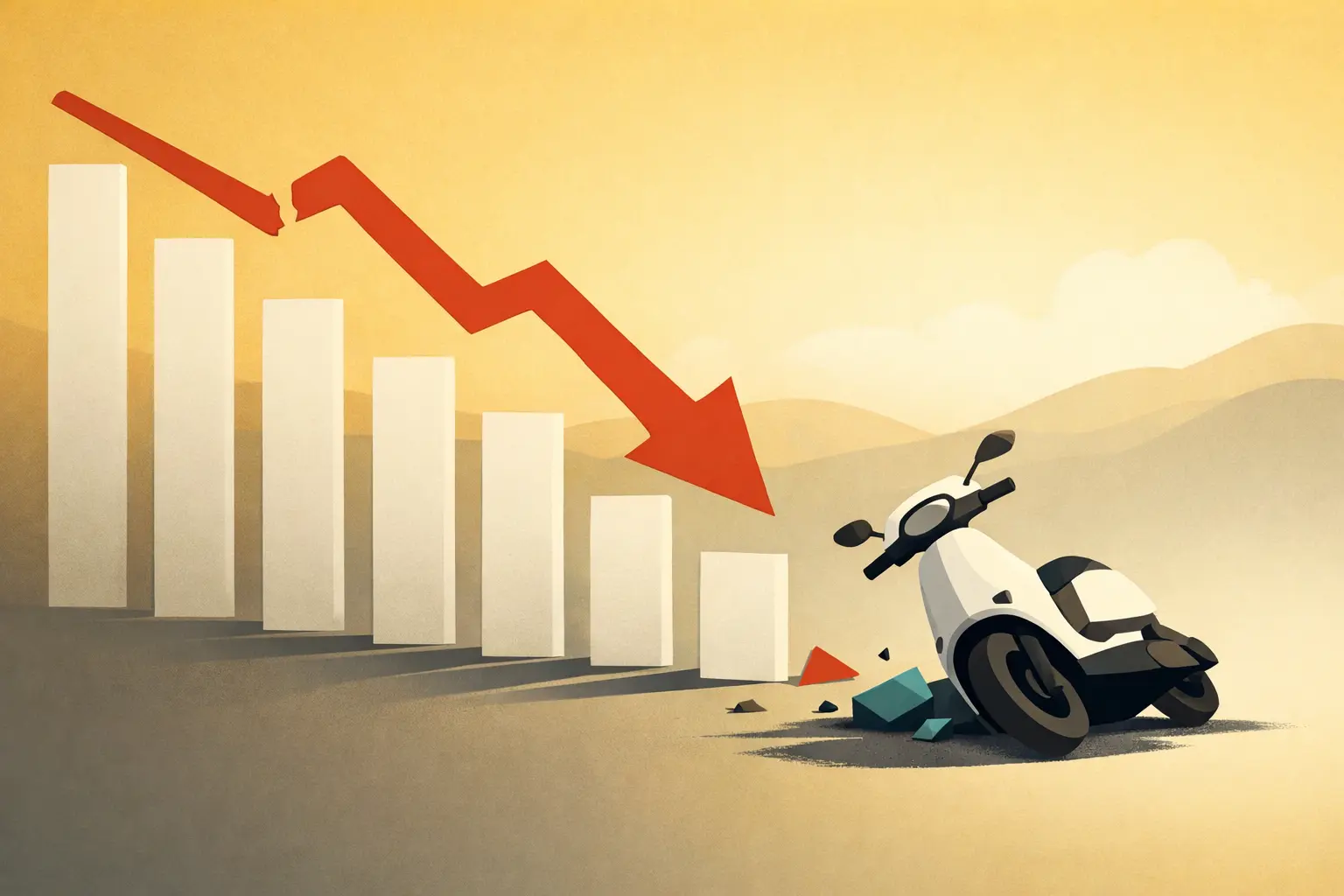
    India’s electric two wheeler race has entered a new phase. Once the undisputed leader of the segment, Ola Electric has slipped out of the top five electric scooter makers in February after a sharp fall in sales and market share.

    The company recorded a steep 47 percent month on month decline in registrations, bringing its total February sales down to just 3,968 units. As a result, its market share fell to 3.55 percent, pushing it out of the industry’s top tier at a time when competition in India’s electric mobility market is intensifying.

    The shift signals a broader transition in the electric two wheeler ecosystem where established automobile manufacturers are strengthening their grip while newer startups struggle to maintain momentum.

    Table of Contents

    1. India’s EV Two Wheeler Market Slows in February
    2. Traditional Automakers Tighten Grip on EV Leadership
    3. Ola Electric Faces Sharp Market Share Erosion

    India’s EV Two Wheeler Market Slows in February

    India’s electric two wheeler market saw a modest contraction in February as overall registrations declined more than 9 percent compared with the previous month. Total electric scooter and motorcycle registrations stood at 1,11,680 units during the month.

    A shorter calendar month contributed to the slowdown, though demand remained relatively resilient across leading manufacturers.

    At the top of the leaderboard, TVS Motor Company retained its leadership position despite a slight decline in sales. The company registered 31,600 units and maintained a commanding 28.3 percent market share.

    Meanwhile, Bajaj Auto continued its strong performance in the electric segment. The company recorded 25,323 units in February and expanded its market share to 22.67 percent, strengthening its position as the second largest electric two wheeler maker in the country.

    The data reflects a broader industry trend where legacy automakers with strong distribution networks are increasingly dominating India’s EV adoption curve.

    Traditional Automakers Tighten Grip on EV Leadership

    Among emerging EV focused companies, Ather Energy held on to the third spot in the rankings. The Bengaluru based startup registered 20,581 units during the month, representing a 7 percent decline from January. Despite the drop in volumes, the company maintained a healthy 18.43 percent market share.

    Ather’s valuation remains strong, with the company’s market capitalization estimated at about Rs 27,150 crore or roughly 3 billion dollars.

    In fourth place, Hero MotoCorp maintained its position in the electric two wheeler segment even as registrations slipped slightly. The company sold 12,512 units in February and held an 11.2 percent share of the market.

    The growing presence of large automobile manufacturers highlights how established supply chains, brand trust, and dealership networks are playing a decisive role in the rapidly evolving EV market.

    Ola Electric Faces Sharp Market Share Erosion

    The most striking shift in February came from Ola Electric’s dramatic fall in sales.

    Once the dominant force in India’s electric scooter market with more than 35 percent market share in 2024, the company has seen a steep erosion in its position over the past year. February’s 3.55 percent share represents one of its lowest points since entering the segment.

    The company’s declining volumes created space for Greaves Electric Mobility to enter the top five electric two wheeler manufacturers. Greaves Electric captured a 4.23 percent market share despite an 11.55 percent decline in monthly sales.

    Other players continued to jostle for position in the growing EV ecosystem. BGauss, River Mobility, and e-Sprinto retained their positions among the next tier of manufacturers, although each reported varying degrees of sales decline during the month.

    One bright spot in the rankings came from Simple Energy, which entered the top ten electric two wheeler makers after registrations surged more than 45 percent in February. The company replaced Pure EV in the list.


    The reshuffling of rankings suggests that India’s electric two wheeler market is moving into a more competitive and mature phase. For Ola Electric, once the poster child of the country’s EV revolution, the challenge ahead will be regaining consumer confidence and rebuilding its position in a market that is no longer defined by early mover advantage alone