Author: Kunal K

  • InstaHelp Urban Company Hits 50,000 Daily Bookings — But Profitability Remains Uncertain

    InstaHelp Urban Company Hits 50,000 Daily Bookings — But Profitability Remains Uncertain

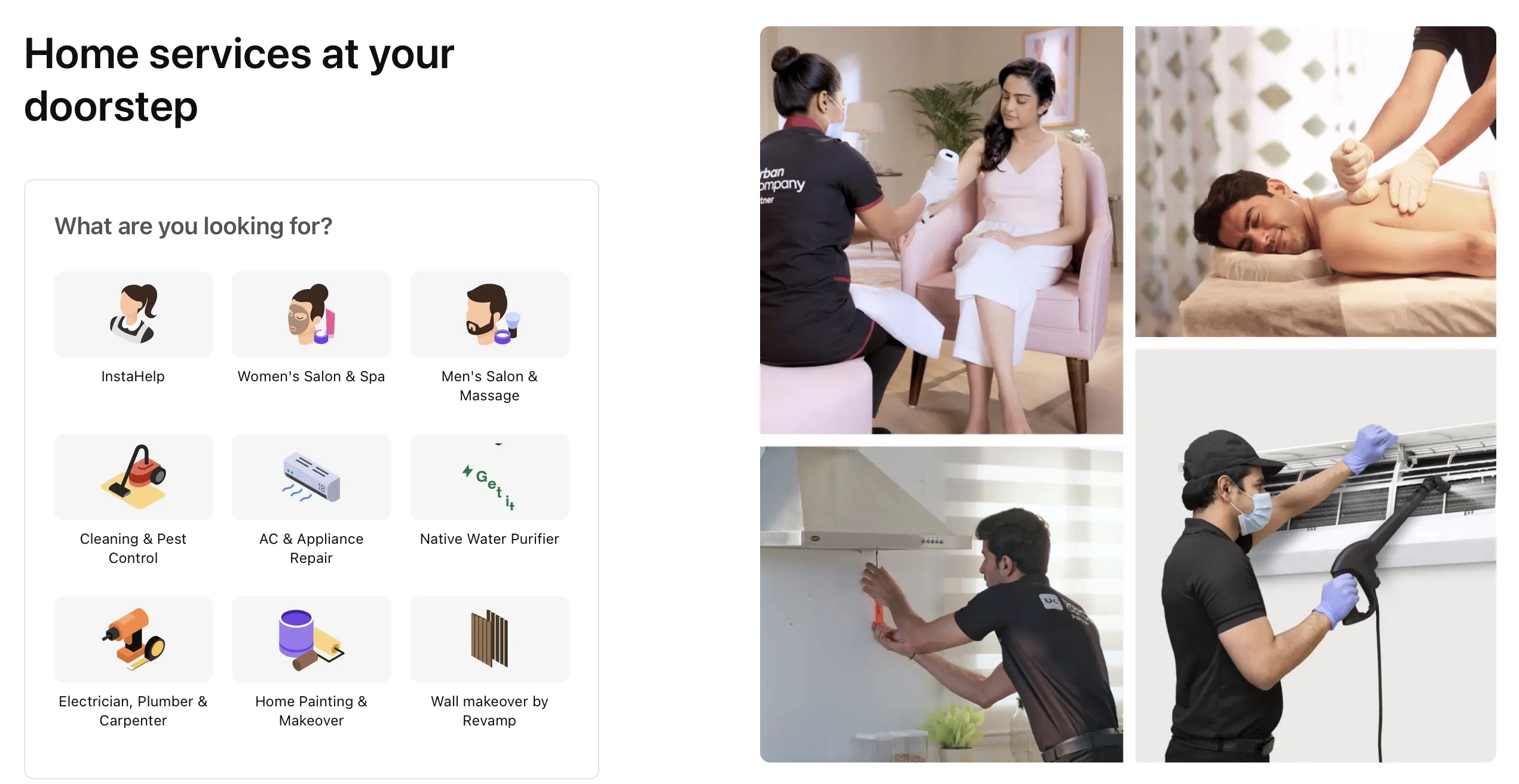
    InstaHelp Urban Company has crossed 50,000 daily bookings across five Indian metros, marking the fastest scale-up in the company’s history. Less than a year after its Mumbai pilot, the quick housekeeping vertical is now live across dense micro-markets in Mumbai, Bengaluru, Delhi NCR, Hyderabad and Pune.

    The milestone is symbolic. Urban Company’s core India consumer services business took nearly six years to reach similar daily volumes. InstaHelp has achieved that number in under twelve months.

    Yet the bigger story is not scale. It is sustainability.

    InstaHelp Urban Company: Scale Is Rising Faster Than Profits

    In Q3 FY26, InstaHelp Urban Company recorded 1.61 million orders and ₹28 crore in net transaction value. But it also reported an adjusted EBITDA loss of ₹61 crore.

    Loss per order narrowed significantly — from ₹760 in Q2 to ₹381 in Q3 — suggesting improving unit economics. Still, profitability remains distant.

    Urban Company’s leadership has been unusually transparent. The company has acknowledged that it does not yet know what steady-state margins for InstaHelp Urban Company will look like — or how long it will take to reach break-even.

    That candor reflects the experimental nature of the model.

    Why InstaHelp Urban Company Depends on Micro-Market Density

    Unlike Urban Company’s traditional categories such as beauty or appliance repair, InstaHelp Urban Company operates in tighter catchment zones. Execution depends heavily on:

    • High demand density
    • Strong partner utilisation
    • Reliable supply within 10–15 minute response windows
    • Increasing average order value (AOV)

    In many ways, the model resembles a blend of quick-commerce logistics and marketplace aggregation. The operational complexity multiplies rather than adds up.

    The company describes the business as “micro-market heavy and micro-market dense,” meaning profitability depends on local clustering of both demand and service partners.

    Pricing Remains the Core Challenge for InstaHelp Urban Company

    At present, InstaHelp Urban Company services are priced aggressively — often at ₹149, and occasionally as low as ₹49.

    These price points drive adoption. But they also suppress margins.

    Internally, executives estimate that average order value likely needs to reach ₹300–₹700 for the business to approach break-even. On earnings calls, leadership has suggested AOV must increase to roughly 1.8–2 times current levels.

    Until that pricing power materializes, growth may continue — but profits may not.

    Demand Patterns Are Still Inconsistent

    Usage data suggests InstaHelp Urban Company is not yet a habitual service for most customers.

    Approximately 30–40% of demand comes from segments such as bachelors and working women who batch chores and schedule services in advance. The remaining 60% appears reactive — bookings triggered by a househelp’s absence, guest visits or episodic cleaning needs.

    This differs from food delivery or grocery quick-commerce platforms, where weekly or daily repeat behaviour anchors predictable volumes.

    For InstaHelp Urban Company, repeat usage is improving in older micro-markets — but consistency remains a work in progress.

    Growth Momentum vs. Business Model Clarity

    The central tension is this: InstaHelp Urban Company has demonstrated clear demand. It has scaled rapidly. It has reduced per-order losses within a single quarter.

    But it still cannot define with precision:

    • What mature margins will look like
    • How much total capital will be required
    • When the business will stop burning cash
    • What a “good” outcome truly means

    After nearly a year of operations and tens of crores in quarterly losses, those questions remain open.

    Urban Company may not have the luxury of waiting. Competition in hyperlocal services is intensifying, and consumer expectations around speed and convenience are shifting rapidly across Indian metros.

    The Bigger Question for InstaHelp Urban Company

    Fifty thousand daily bookings prove that demand exists. The harder challenge for InstaHelp Urban Company is converting that demand into predictable, durable profitability.

    Scale has arrived.

    The economics are still being written.

    Link: Urban Company
  • From Scrolling to Conversing: JioHotstar Adds ChatGPT to Guide Viewers

    From Scrolling to Conversing: JioHotstar Adds ChatGPT to Guide Viewers

    In the increasingly crowded battle for attention in India’s streaming market, JioHotstar is turning to artificial intelligence to help viewers answer a deceptively simple question: What should I watch tonight?

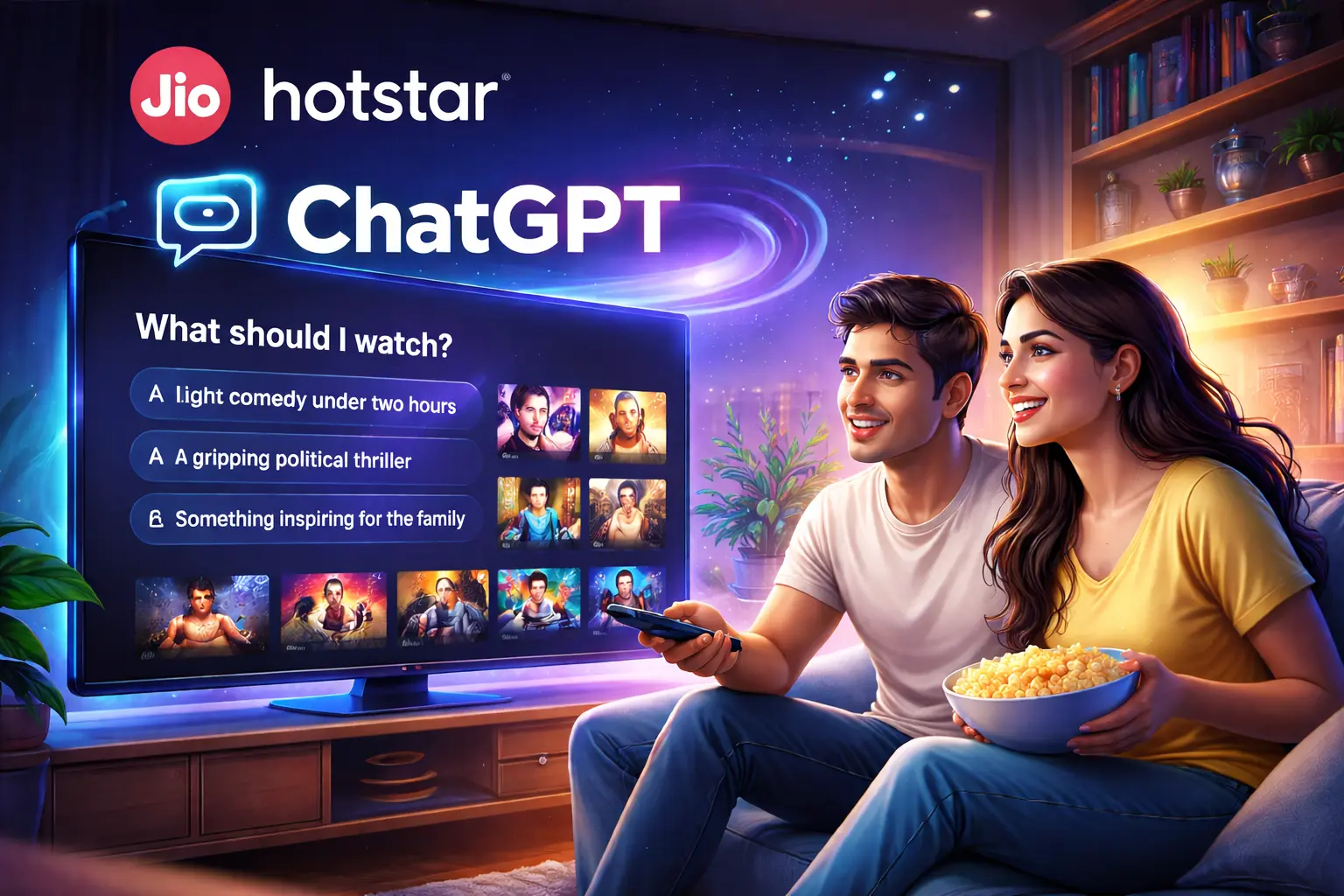
    This week, the platform announced a new in-app feature powered by ChatGPT, the conversational AI developed by OpenAI, allowing users to receive personalized recommendations through natural-language prompts. Instead of scrolling endlessly through rows of thumbnails, subscribers can now type or speak queries like “a light comedy under two hours,” “a political thriller based on real events,” or “something inspiring to watch with family,” and receive curated suggestions in seconds.

    The move reflects a broader shift in streaming, where discovery — not content — has become the industry’s most urgent challenge. With thousands of titles spanning Bollywood blockbusters, regional cinema, live sports and international series, platforms have long relied on algorithmic recommendation engines based on viewing history. But those systems, while effective at predicting taste, have struggled to interpret mood and context.

    By integrating a conversational interface, JioHotstar is betting that users prefer dialogue over dashboards.

    Executives familiar with the rollout describe the feature as more than a search tool. The AI assistant can explain why a particular show might appeal to a viewer, compare two titles, or even generate quick summaries without spoilers. In early demonstrations, the system handled nuanced prompts — such as “something like ‘Game of Thrones’ but shorter” or “a cricket documentary that’s not too technical” — with fluency.

    The integration is the latest step in the digital ambitions of Reliance Jio, which has steadily expanded from telecommunications into entertainment and digital services. As competition intensifies among domestic and global streaming giants, differentiation increasingly hinges on user experience rather than sheer catalog size.

    India represents one of the world’s fastest-growing streaming markets, but it is also among the most price-sensitive. Platforms must balance subscription growth with retention, and frictionless discovery has become a key metric. Industry analysts say AI-driven recommendation tools could reduce churn by shortening the time between opening an app and pressing play.

    Yet the adoption of generative AI inside consumer platforms comes with questions. How transparent are the recommendation criteria? Could conversational interfaces subtly prioritize in-house productions or sponsored content? And how will user data be managed in systems that require contextual understanding?

    Company officials have said that the AI assistant operates within existing privacy safeguards and does not store personal conversations beyond what is necessary to improve recommendations. Still, digital rights advocates are likely to scrutinize the fine print as such tools become more deeply embedded in daily media consumption.

    For now, the appeal is simple: less scrolling, more watching.

    In living rooms across India, where families often negotiate over the remote control, a neutral digital arbiter may prove useful. If the assistant can bridge generational divides — suggesting a historical drama palatable to parents and engaging enough for teenagers — it may quietly reshape how households choose entertainment.

    Streaming once promised limitless choice. The paradox, as many viewers know, is that too much choice can feel paralyzing. By placing conversational AI at the center of discovery, JioHotstar is attempting to restore a sense of ease — turning an overwhelming library into something that feels curated, responsive and, above all, human.

  • The Unfinished Ring: How Nokia Is Reclaiming Its Signal in 2026

    The Unfinished Ring: How Nokia Is Reclaiming Its Signal in 2026

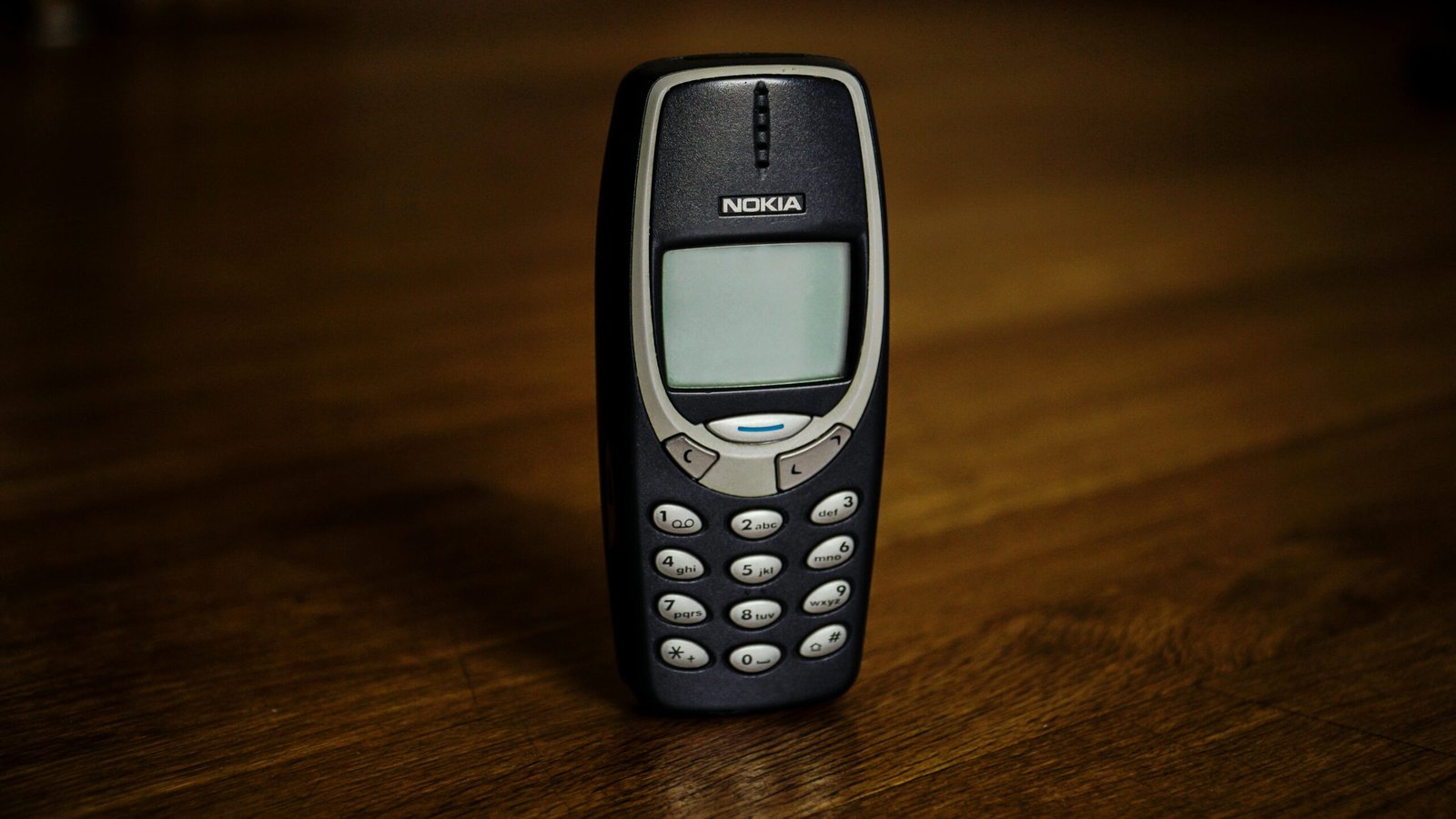
    For a generation that grew up playing Snake on indestructible handsets, the name Nokia evokes both nostalgia and caution — a titan that once ruled the mobile world, then faltered spectacularly in the age of touchscreens. Yet in 2026, the Finnish company is staging something far subtler than a comeback. It is not trying to be cool again. It is trying to be essential.

    And in a world rebuilding its digital backbone, that may matter more.

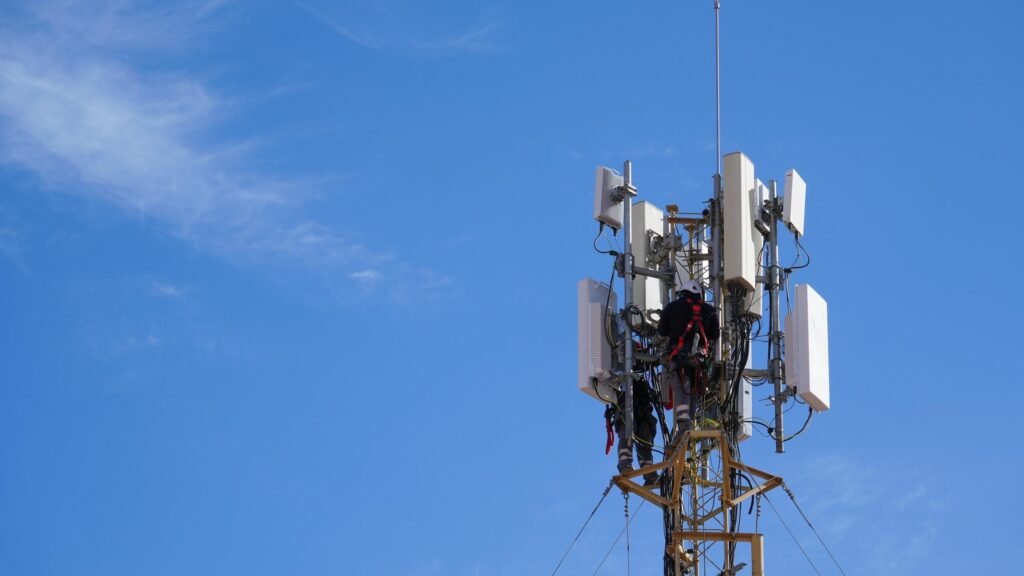
    Unlike its headline-grabbing rivals — Apple and Samsung — Nokia’s renaissance is not defined by glossy product launches or viral keynote moments. It is unfolding in server rooms, data centers and at the quiet edges of cities where 5G and early 6G infrastructure are being laid down. After years of restructuring, divestments and refocusing, Nokia has become less a phone company and more a nervous system company.

    The pivot began years ago, when Nokia ceded the smartphone wars and sold its handset division to Microsoft in 2014. Many assumed the brand would fade into footnotes of business-school case studies. Instead, Nokia leaned into what it had always done well: networks. It doubled down on telecommunications infrastructure, enterprise connectivity and cloud-native network software — areas less visible to consumers but indispensable to governments and corporations racing toward digitization.


    Nokia’s resurgence in 2026 is anchored less in smartphones and more in 5G infrastructure, private enterprise networks and cloud-native telecom systems

    By 2026, that bet is bearing fruit.

    As geopolitical tensions reshaped supply chains and governments reconsidered foreign telecom dependencies, Nokia found itself uniquely positioned. European and North American policymakers, wary of overreliance on Chinese vendors, have increasingly turned to trusted alternatives. Alongside Sweden’s Ericsson, Nokia has emerged as a preferred supplier for 5G rollouts and private enterprise networks.

    But this is not merely a geopolitical story. It is also a technological one.

    The proliferation of AI-driven services — autonomous logistics, smart manufacturing, edge computing — has created demand for ultra-reliable, low-latency connectivity. Nokia’s investments in private 5G networks for factories, ports and campuses have quietly positioned it at the center of the so-called Fourth Industrial Revolution. In 2026, the company reports growing contracts with industrial firms that no longer see connectivity as an expense but as core infrastructure.

    Even its consumer presence, once a symbol of decline, has found a second life. While Nokia-branded smartphones, produced under licensing agreements, occupy a modest slice of the global market, they have carved out a niche among consumers seeking durability, repairability and clean Android experiences. In an era increasingly critical of disposable electronics, that ethos resonates.

    The shift in corporate culture has been just as significant as the shift in strategy. Nokia’s leadership has emphasized disciplined execution over bravado, shedding peripheral ventures and investing in research and development, particularly in early 6G experimentation. In research labs across Finland and beyond, engineers are already modeling the next generation of connectivity — one that promises not just faster speeds but smarter, more energy-efficient networks.

    For investors, the narrative is compelling precisely because it is unglamorous. Nokia is no longer chasing trends; it is underwriting them. As cloud providers expand, as governments digitize public services, as companies automate operations, they all require resilient networks. Nokia has made itself part of that invisible architecture.


    Though no longer a dominant force in consumer handsets, Nokia-branded smartphones continue to appeal to buyers seeking durability, repairability and simplicity.

    Still, challenges loom. Competition remains fierce. Profit margins in network equipment can be thin, and technological leadership is never permanent. The company must navigate fluctuating semiconductor supplies, evolving regulatory landscapes and the relentless pace of innovation.

    Yet there is something poetic about Nokia’s resurgence. In the early 2000s, it connected billions through pocket-sized devices. In 2026, it connects industries, cities and machines — less visible, perhaps, but arguably more foundational.

    The ringtone may no longer echo from every street corner. But the signal, stronger and steadier, is back.