Table of Contents
- India’s AI Moment Has Arrived
- Sarvam AI and the Infrastructure Play
- Why This Could Be India’s Big Leap
India’s AI Moment Has Arrived
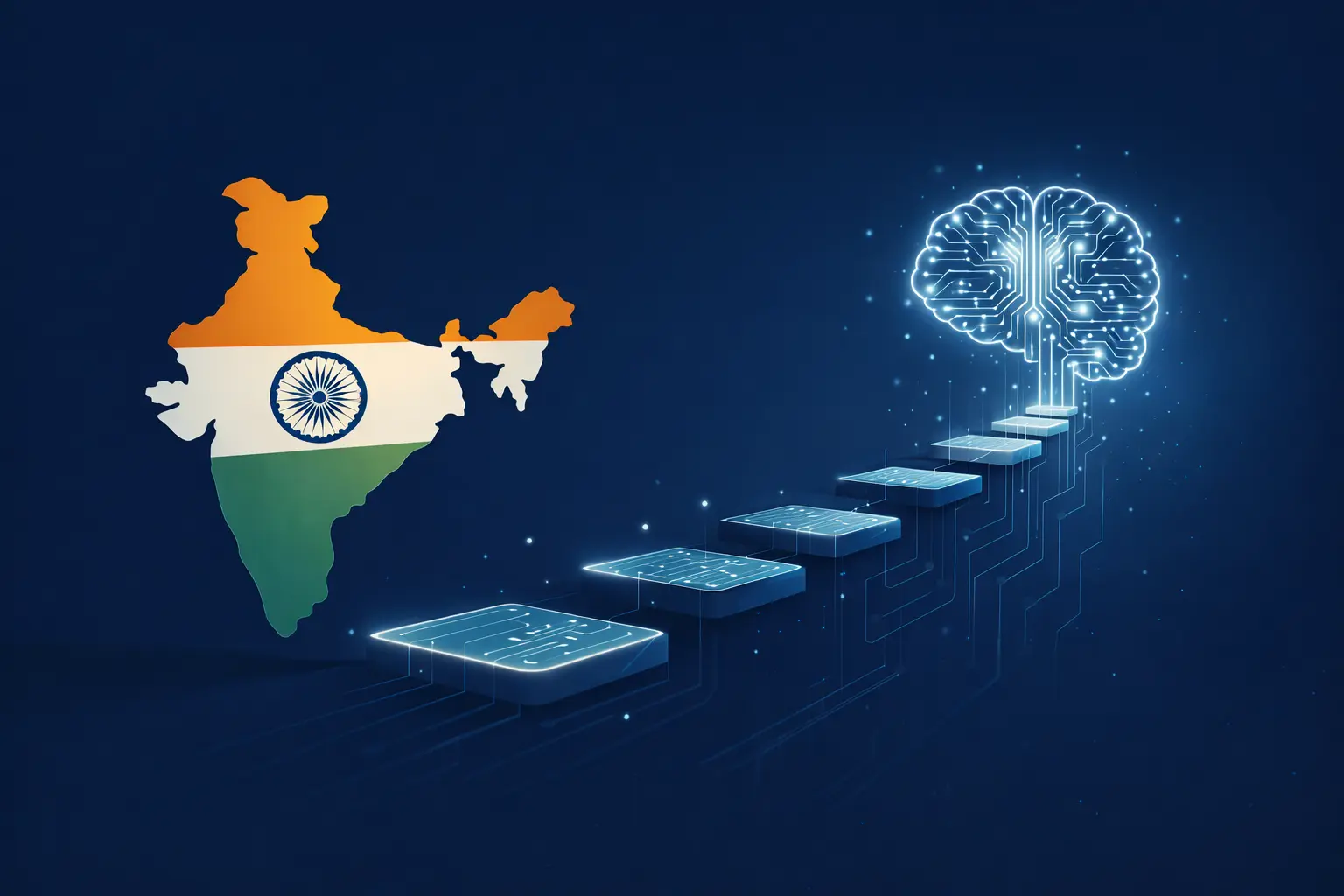
For decades, India has been described as the back office of the world. In software services, it scaled talent. In digital payments, it built rails like UPI. In space, it launched missions at a fraction of global costs. But in artificial intelligence, the country largely remained a consumer of Western breakthroughs. That narrative is now being tested by Sarvam AI.
Sarvam AI represents a deeper ambition than another startup riding a global trend. It signals a structural shift. India is no longer content building applications on top of foreign models. It wants to build foundational capabilities at home.
Artificial intelligence is not merely another sector. It is infrastructure for the next industrial wave. It powers healthcare diagnostics, financial risk analysis, education tools, government services, and logistics optimization. For a country with more than a billion people and hundreds of languages, building indigenous AI systems is not only strategic but necessary.
Sarvam AI emerges at this intersection of ambition and urgency.
Sarvam AI and the Infrastructure Play
Unlike consumer facing AI applications that chase chat interfaces and viral adoption, Sarvam AI is focused on deeper layers of the stack. It aims to build large language models and AI systems tailored for Indian contexts, languages, and governance needs.
India’s digital public infrastructure has already shown how scale and inclusion can coexist. Aadhaar enabled identity at scale. UPI transformed payments. The next frontier is intelligence infrastructure.
Sarvam AI’s significance lies in three dimensions.
First, language. India’s linguistic diversity is not a side note. It is central to inclusion. Most global AI systems are optimized for English and a handful of European languages. For AI to truly empower citizens in Tier two and Tier three cities, it must understand and generate content in regional languages with nuance.
Second, sovereignty. As AI becomes embedded in critical systems, from public welfare to defense analytics, relying entirely on external foundational models carries strategic risks. A domestic AI backbone offers control over data governance, privacy, and customization.
Third, economic leverage. The global AI race is not only about research prestige. It is about market share and industrial competitiveness. Countries that own their models can shape pricing, licensing, and ecosystem standards. Sarvam AI positions India not merely as a market but as a builder.
The play here is not glamorous. It is infrastructural. It mirrors how India approached digital payments. Build the rails first. Let innovation compound on top.
Why This Could Be India’s Big Leap
Every technological wave creates a window. Miss it, and a nation becomes dependent for decades. Seize it, and it reshapes economic trajectories.
Artificial intelligence is such a window.
India has three structural advantages. It has a vast pool of engineers. It has one of the largest digital user bases in the world. And it has experience building public digital goods at population scale.
Sarvam AI sits at the confluence of these strengths. If executed well, it can catalyze an ecosystem of startups building AI solutions for agriculture advisories, vernacular education tools, health triage systems, legal assistance platforms, and MSME automation.
The implications go beyond technology. AI built for India can reduce friction in governance. It can translate policy documents into local languages instantly. It can help small businesses adopt automation without expensive imports. It can create high value research and employment domestically.
There are risks. Capital intensity is high. Talent competition is global. Regulatory clarity around AI remains evolving. But transformative industries are never built in comfort.
In many ways, Sarvam AI is a test of confidence. Can India move from services to science led product innovation. Can it build not just apps, but foundational models. Can it lead rather than follow.
If India succeeds in creating robust, multilingual, scalable AI infrastructure, it will not simply participate in the global AI race. It will redefine its role within it.
Sarvam AI may still be young. But its ambition reflects a larger shift in national mindset. The country that once powered the world’s code may now aim to power its intelligence.
That is not incremental change. That is a leap.
Leave a Reply